



An NTC Temperature Sensor probe is a highly sensitive temperature measurement device based on an NTC(Negative Temperature Coefficient)thermistor.It converts temperature changes into resistance variations,allowing electronic systems to monitor and control temperature accurately.
Due to advantages such as fast response,high sensitivity,compact design,and cost efficiency,NTC thermistor probes are widely used in HVAC systems,refrigeration equipment,automotive electronics,battery management systems,industrial automation,medical devices,and household appliances.
Understanding the structure,materials,and manufacturing process of an NTC temperature sensor probe helps engineers and buyers select the right sensor for their applications.
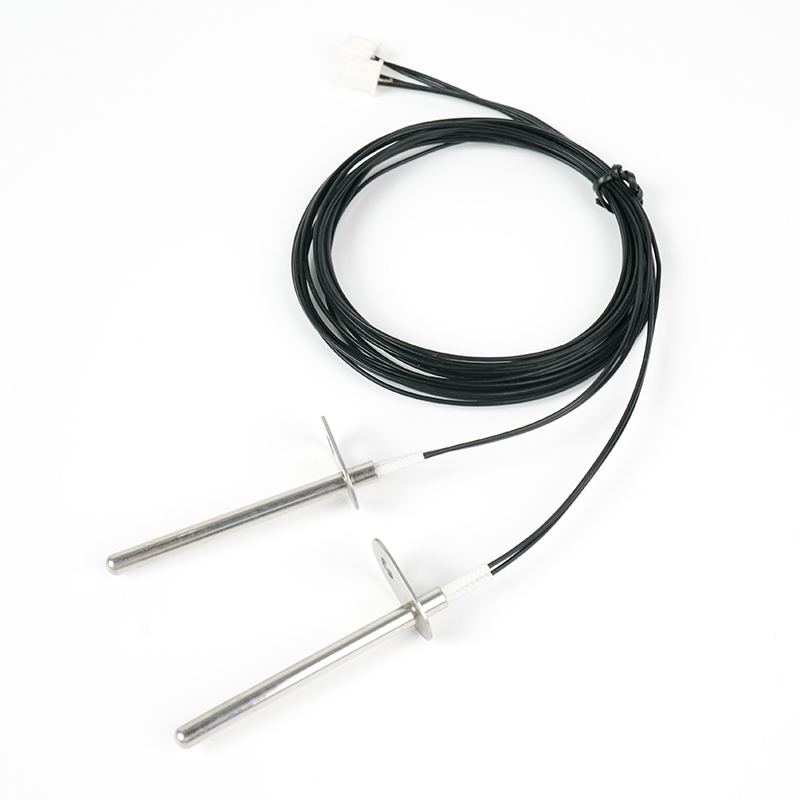
1.Basic Structure of an NTC Temperature Sensor Probe
An NTC temperature sensor probe is composed of several key components,each playing an important role in temperature measurement performance and reliability.
The main structure includes:
1.1 NTC Thermistor Element
The NTC thermistor is the core sensing component of the probe.
It is typically made from semiconductor ceramic materials containing metal oxides such as:
Manganese oxide(MnO)
Nickel oxide(NiO)
Cobalt oxide(CoO)
Copper oxide(CuO)
The resistance of the thermistor decreases as temperature increases,creating a measurable electrical signal.
The quality of the NTC element directly determines:
Temperature accuracy
Sensitivity
Stability
Response time
1.2 Probe Housing
The probe housing protects the thermistor from environmental damage.
Common housing shapes include:
Stainless steel tube
Plastic shell
Glass tube
Epoxy coating
The housing provides:
Mechanical protection
Waterproof performance
Chemical resistance
Heat resistance
For industrial applications,stainless steel NTC probes are commonly preferred due to their durability and corrosion resistance.
1.3 Lead Wire and Cable
The cable connects the NTC sensing element to the control system.
Common cable materials include:
PVC Cable
Features:
Affordable
Flexible
Suitable for general applications
Used in:
Home appliances
HVAC systems
Silicone Cable
Features:
Excellent flexibility
High temperature resistance
Used in:
Industrial equipment
Automotive applications
PTFE Cable
Features:
Excellent chemical resistance
High temperature capability
Used in:
Extreme environments
1.4 Connector and Terminal
The connector provides electrical connection between the sensor and the control system.
Common connector types include:
JST connectors
Molex connectors
Waterproof connectors
Customized terminals
The connector design depends on the application requirements and installation environment.
2.Materials Used in NTC Temperature Sensor Probes
Material selection directly affects sensor performance,durability,and operating temperature range.
2.1 NTC Semiconductor Material
The NTC sensing element uses ceramic semiconductor materials.
Advantages:
High temperature sensitivity
Stable electrical characteristics
Long service life
The material composition determines the resistance-temperature characteristics,commonly known as the B value.
2.2 Stainless Steel Housing
Stainless steel is one of the most widely used probe materials.
Common grades:
SUS304 stainless steel
SUS316 stainless steel
Advantages:
Excellent corrosion resistance
Strong mechanical protection
Suitable for liquid measurement
Applications:
Water heaters
Boilers
Refrigeration systems
Industrial machinery
2.3 Epoxy Resin
Epoxy resin is often used for sealing and insulation.
Functions:
Prevent moisture penetration
Improve insulation performance
Protect internal components
Epoxy-coated NTC probes are commonly used in:
Electronic devices
Battery temperature monitoring
Small equipment
2.4 Plastic Materials
Plastic housings are commonly made from:
ABS
PVC
Nylon
Advantages:
Lightweight
Low cost
Good electrical insulation
Applications:
Air conditioners
Consumer electronics
Temperature controllers
3.Manufacturing Process of NTC Temperature Sensor Probe
The production of an NTC temperature sensor probe involves multiple precision manufacturing steps.
Step 1:NTC Thermistor Manufacturing
The manufacturing process begins with preparing semiconductor ceramic materials.
Main steps include:
Mixing metal oxide powders
Pressing materials into desired shapes
High-temperature sintering
Electrode coating
Electrical performance testing
After production,each thermistor is tested for:
Resistance value
B value
Temperature accuracy
Stability
Step 2:Thermistor Assembly
The NTC element is connected with lead wires through processes such as:
Welding
Crimping
Soldering
The connection must ensure:
Stable electrical performance
Strong mechanical bonding
Long-term reliability
Step 3:Insulation and Sealing
After wire connection,the sensing element is protected through:
Epoxy filling
Heat shrinking
Silicone sealing
Glass encapsulation
This step improves:
Waterproof performance
Shock resistance
Environmental protection
Step 4:Probe Housing Installation
The assembled thermistor is inserted into the protective housing.
Common methods include:
Tube insertion
Glue sealing
Laser welding
Compression fixing
For waterproof NTC probes,sealing quality is critical to prevent moisture damage.
Step 5:Cable and Connector Assembly
Manufacturers install:
Cable sleeves
Connectors
Terminals
Customized options include:
Cable length
Connector type
Wire diameter
Terminal design
Step 6:Calibration and Quality Testing
Before shipment,NTC temperature probes undergo strict testing.
Common tests include:
Resistance Test
Checks whether resistance matches the specified value.
Temperature Accuracy Test
Confirms measurement accuracy at different temperatures.
Waterproof Test
Ensures protection against moisture.
Aging Test
Evaluates long-term stability.
Pull Strength Test
Checks cable connection durability.
4.Different Types of NTC Temperature Sensor Probes
Depending on application requirements,NTC probes can be classified into several types.
| Type | Features | Applications |
|---|---|---|
| Waterproof NTC Probe | Moisture-resistant design | Water heaters, refrigeration |
| Stainless Steel NTC Probe | Strong and corrosion resistant | Industrial equipment |
| Epoxy NTC Probe | Fast response | Electronics |
| Glass Encapsulated NTC Probe | High stability | Precision measurement |
| Custom NTC Probe | Designed for specific requirements | OEM projects |
5.Applications of NTC Temperature Sensor Probes
NTC probes are widely used across many industries.
HVAC and Refrigeration
Applications:
Evaporator temperature monitoring
Air temperature detection
Compressor protection
Automotive Industry
Applications:
Battery temperature monitoring
Engine temperature control
Climate control systems
Battery Management Systems
NTC probes help monitor:
Battery cell temperature
Charging safety
Thermal management
Industrial Automation
Used for:
Equipment temperature monitoring
Process control
Machine protection
Household Appliances
Common applications:
Refrigerators
Air conditioners
Coffee machines
Water heaters
6.How to Choose an NTC Temperature Sensor Manufacturer
For OEM and industrial purchasing,selecting a reliable supplier is important.
A professional NTC sensor manufacturer should provide:
Customized resistance values
Different probe structures
Temperature calibration services
OEM production capability
Quality inspection reports
Important factors include:
Manufacturing experience
Production capacity
Quality control system
Customization ability
FAQ
1.What is an NTC temperature sensor probe?
An NTC temperature sensor probe is a temperature measurement device that uses an NTC thermistor to detect temperature changes through resistance variation.
2.What materials are used for NTC probes?
NTC probes commonly use ceramic semiconductor materials,stainless steel,epoxy resin,plastic housings,and different types of insulated cables.
3.Are NTC temperature sensor probes waterproof?
Yes.Many NTC probes use stainless steel housings or epoxy sealing designs to provide waterproof protection for applications involving moisture or liquids.
4.What is the difference between an NTC probe and an RTD sensor?
NTC probes generally provide higher sensitivity and faster response,while RTD sensors offer higher accuracy and better stability in precision industrial applications.
5.Can NTC temperature sensor probes be customized?
Yes.Manufacturers can customize resistance values,cable lengths,probe dimensions,connectors,temperature ranges,and housing materials according to customer requirements.
