



Selecting the right RTD Temperature Sensor is essential for achieving accurate and reliable temperature measurement in industrial processes.Whether you're monitoring food production,chemical processing,HVAC systems,or manufacturing equipment,choosing the appropriate sensor can improve process efficiency,reduce maintenance costs,and ensure consistent product quality.
This guide explains the most important factors to consider when selecting an rtd temperature sensor for your application.
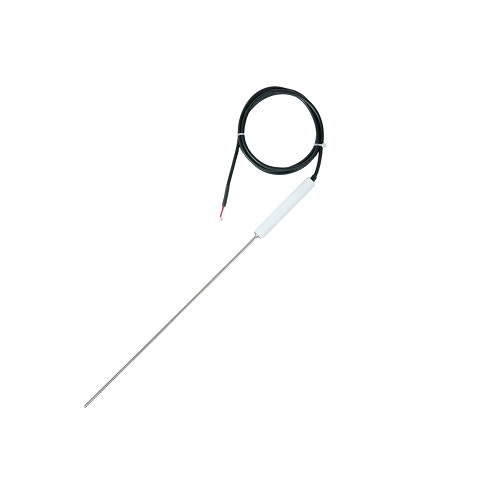
Understand Your Temperature Measurement Requirements
Before choosing an RTD temperature sensor,clearly define your application's operating conditions.
Consider the following questions:
What temperature range will the sensor measure?
How much accuracy is required?
Is fast response time important?
Will the sensor operate in corrosive or wet environments?
Does the application require continuous monitoring?
Understanding these requirements helps narrow down the most suitable sensor design.
Choose the Appropriate RTD Element
The sensing element determines the performance of an RTD temperature sensor.
The most common options include:
pt100 temperature sensor–Offers excellent accuracy and is widely used in industrial automation.
PT1000 Temperature Sensor–Provides higher resistance,making it suitable for long cable installations and reducing lead wire resistance errors.
Selecting the correct element depends on your measurement accuracy,installation distance,and control system compatibility.
Select the Right Wiring Configuration
The wiring method directly affects measurement accuracy.
Common configurations include:
2-Wire RTD
Lowest installation cost
Suitable for short cable distances
Lower accuracy due to lead wire resistance
3-Wire RTD
Most commonly used in industrial applications
Compensates for lead wire resistance
Good balance between cost and accuracy
4-Wire RTD
Highest measurement accuracy
Eliminates lead resistance errors
Ideal for laboratories and precision manufacturing
Choosing the proper wiring configuration ensures reliable temperature readings.
Consider Probe Material and Construction
Different environments require different probe materials.
Popular options include:
Stainless steel probes
Inconel probes
Mineral insulated probes
Waterproof RTD probes
Food-grade RTD probes
A properly selected probe improves durability while protecting the sensor from moisture,chemicals,vibration,and high pressure.
Evaluate Accuracy Requirements
Accuracy is one of the primary advantages of an RTD temperature sensor.
Applications such as pharmaceutical manufacturing,laboratory testing,and semiconductor production often require extremely precise measurements,while general industrial monitoring may have less demanding requirements.
Be sure to review:
Sensor tolerance
Calibration standards
Response time
Long-term stability
Repeatability
Match the Sensor to Your Industry
Different industries require different RTD temperature sensor designs.
Typical applications include:
Food processing
Pharmaceutical manufacturing
Chemical plants
Oil and gas
HVAC systems
Industrial automation
Plastic injection molding
Power generation
Water treatment
Environmental monitoring
Selecting an application-specific sensor improves reliability and operational efficiency.
Consider Environmental Conditions
Environmental factors can significantly influence sensor performance.
Important considerations include:
Ambient temperature
Humidity
Dust exposure
Chemical corrosion
Mechanical vibration
High-pressure conditions
Outdoor installation
For harsh environments,a waterproof RTD temperature sensor with a robust protective sheath is often the best choice.
Verify Compatibility with Control Systems
Before purchasing an RTD temperature sensor,ensure compatibility with your existing equipment.
Check compatibility with:
PLC systems
Temperature controllers
Data loggers
Industrial transmitters
SCADA systems
Digital monitoring equipment
Proper integration simplifies installation and improves measurement reliability.
Work with a Reliable RTD Temperature Sensor Manufacturer
Choosing a professional RTD temperature sensor manufacturer provides several advantages:
High-quality sensing elements
Advanced manufacturing technology
Strict quality control
OEM and custom solutions
Fast production and delivery
Technical engineering support
International quality certifications
An experienced RTD temperature sensor supplier can also recommend customized solutions based on your application's specific requirements.
Future Trends in RTD Temperature Sensors
As industrial automation continues to evolve,RTD temperature sensors are becoming more advanced.
Emerging trends include:
Smart temperature monitoring
Wireless RTD sensors
IoT-enabled measurement systems
Higher accuracy sensing technology
Miniaturized sensor designs
Faster response times
Improved corrosion resistance
These innovations help manufacturers increase efficiency while supporting predictive maintenance and real-time process control.
Choosing the right RTD temperature sensor involves evaluating temperature range,sensing element,wiring configuration,probe material,environmental conditions,and system compatibility.Selecting a high-quality sensor from a trusted RTD temperature sensor manufacturer ensures accurate measurements,reliable long-term performance,and lower operating costs.
Whether you need a PT100 temperature sensor,PT1000 temperature sensor,or a custom industrial solution,investing in the right RTD temperature sensor will improve process control and support consistent production quality.
FAQ
1.What is the difference between a PT100 and a PT1000 temperature sensor?
A PT100 temperature sensor has a resistance of 100Ωat 0°C,while a PT1000 temperature sensor has 1000Ω.PT1000 sensors are better suited for long cable runs because they are less affected by lead wire resistance.
2.Which wiring configuration is best for an RTD temperature sensor?
A 3-wire RTD is the most common choice for industrial applications because it provides a good balance between cost and accuracy.A 4-wire RTD offers the highest precision for laboratory and calibration applications.
3.Where are RTD temperature sensors commonly used?
They are widely used in food processing,pharmaceuticals,chemical manufacturing,HVAC systems,industrial automation,energy,water treatment,and environmental monitoring.
4.How do I choose a reliable RTD temperature sensor manufacturer?
Look for manufacturers with advanced production equipment,strict quality control,OEM customization capabilities,international certifications,and strong technical support to ensure consistent product performance and long-term reliability.
