



RTD Temperature Sensors are widely used for monitoring and controlling temperature in industrial equipment, automation systems, HVAC, laboratories, process industries, and many other applications. Their operating principle is based on the predictable relationship between electrical resistance and temperature.
Because RTD sensors can provide stable and repeatable temperature measurements, they are suitable for applications where temperature needs to be monitored continuously or controlled within a defined range.
From industrial process equipment to heating and cooling systems, choosing the right rtd temperature sensor depends on the temperature range, installation environment, required accuracy, sensor construction, and measurement system.
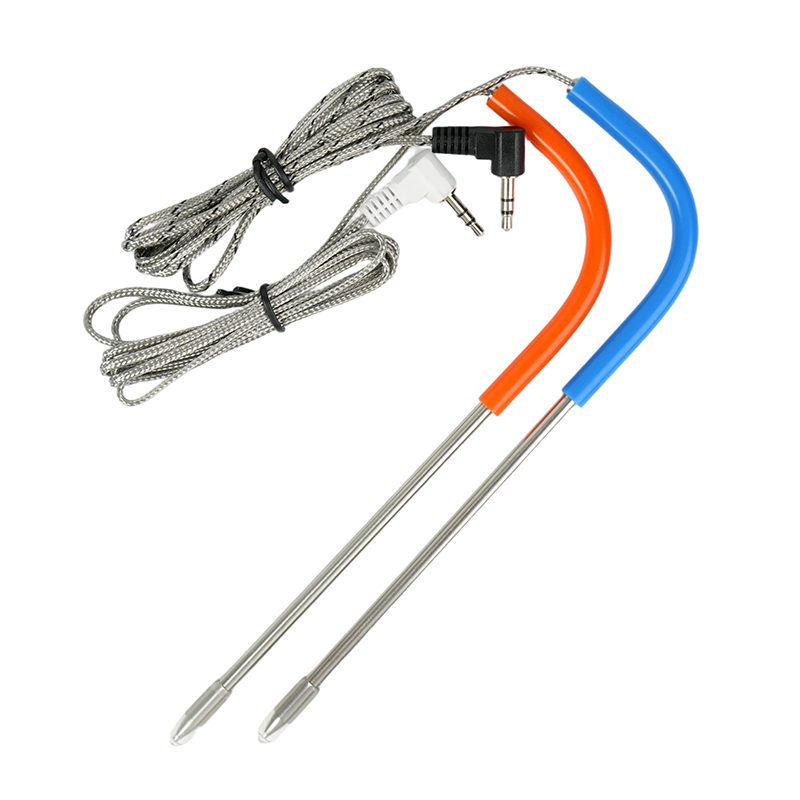
What Is an RTD temperature sensor?
An RTD, or resistance temperature detector, is a temperature sensing device that measures temperature by detecting changes in electrical resistance.
As the temperature changes, the resistance of the sensing element changes accordingly. The connected measuring instrument interprets this resistance change and converts it into a temperature value.
PT100 and PT1000 are among the most common RTD sensor types. Different probe designs, wiring configurations, materials, and connection methods can be selected according to the application.
Why Are RTD Temperature Sensors Widely Used?
One of the main advantages of an RTD sensor is its predictable resistance-temperature relationship. This makes RTD technology suitable for applications requiring consistent temperature monitoring.
Other factors that make RTD sensors popular include:
Stable temperature measurement
Repeatable resistance characteristics
Availability in different sensor configurations
Compatibility with industrial measurement systems
Suitable options for different temperature ranges
Flexible installation and probe designs
These characteristics allow RTD temperature sensors to be used across a wide range of industrial and commercial environments.
What Are the Main Applications of RTD Temperature Sensors?
1. Industrial Process Control
Industrial processes often require continuous temperature monitoring. An industrial RTD temperature sensor can be installed in processing equipment, tanks, pipes, heating systems, and other machinery to monitor process temperature.
Temperature information can then be sent to a controller, PLC, transmitter, or monitoring system. This allows operators and automated systems to monitor process conditions and make adjustments when necessary.
2. HVAC and Building Systems
Heating, ventilation, and air-conditioning systems rely on temperature sensors to monitor indoor and equipment temperatures.
RTD sensors can be used in HVAC equipment, air handling systems, heating systems, cooling systems, and other temperature-control applications. The measured temperature can be used by a controller to regulate heating or cooling operation.
3. Food and Beverage Processing
Temperature monitoring is important in many food and beverage processes. RTD sensors can be used to monitor temperatures during heating, cooling, storage, processing, and other operations.
The appropriate sensor construction should be selected according to the process environment, installation requirements, cleaning procedures, and applicable industry requirements.
4. Laboratory Equipment
Laboratory instruments often require controlled and repeatable temperature measurement. RTD temperature sensors can be integrated into laboratory equipment and testing systems for temperature monitoring.
Applications may include temperature-controlled chambers, testing equipment, heating devices, and other laboratory systems where stable temperature measurement is required.
5. Pharmaceutical and Chemical Equipment
Temperature can be an important process parameter in pharmaceutical and chemical manufacturing. RTD sensors can be used to monitor temperatures in tanks, process equipment, heating systems, cooling systems, and pipelines.
Sensor selection should take into account the process temperature, chemical environment, installation method, material compatibility, and applicable requirements.
6. Machinery and Industrial Equipment
Many types of industrial machinery require temperature monitoring to help operators understand operating conditions. An RTD sensor can be installed to measure the temperature of equipment components, fluids, heating systems, or other monitored points.
For example, RTD sensors can be integrated into manufacturing equipment, thermal processing machinery, pumps, compressors, and other industrial systems where temperature monitoring is required.
7. Energy and Power Systems
Temperature monitoring is used in many energy-related systems and electrical equipment. RTD temperature sensors can be applied to monitor the temperature of equipment and components where suitable sensor construction and installation are available.
The temperature signal can be connected to monitoring or control systems to provide operators with information about operating conditions.
8. Plastic Processing Machinery
Temperature control is essential in many plastic processing applications. Equipment such as extrusion machines, injection molding machines, and plastic processing systems often requires temperature monitoring at specific points.
An RTD temperature sensor can be used to monitor temperatures in heating zones, process equipment, and other locations where stable temperature measurement is required.
9. Water and Fluid Temperature Measurement
RTD sensors can also be used for monitoring the temperature of water and other compatible fluids. Depending on the application, sensors may be installed in tanks, pipes, circulation systems, heat exchangers, or other fluid-handling equipment.
The probe construction, installation method, and material should be selected according to the fluid and operating environment.
10. Industrial Automation
Temperature measurement is an important part of industrial automation. An RTD temperature sensor can provide temperature signals to PLCs, temperature controllers, data acquisition systems, and industrial monitoring equipment.
By integrating temperature sensors with automated control systems, manufacturers can monitor temperature continuously and use measurement data for process control and equipment management.
Common RTD Temperature Sensor Types for Different Applications
Different applications require different sensor configurations. PT100 and PT1000 are common RTD choices, while the physical construction can vary according to the installation environment.
| Application | Common Considerations |
|---|---|
| Industrial process control | Temperature range, installation, durability and measurement accuracy |
| HVAC | Installation location, response and system compatibility |
| Food processing | Material, cleaning conditions and installation requirements |
| Laboratory equipment | Measurement stability, accuracy and temperature range |
| Plastic processing | Temperature range, mounting method and process conditions |
| Automation systems | Sensor output, wiring and controller compatibility |
How to Choose an RTD Temperature Sensor for Your Application?
Choosing the right RTD temperature sensor requires consideration of both the sensor itself and the complete measurement system.
Temperature Range
First determine the minimum and maximum temperature that the sensor will encounter. The selected RTD should be suitable for the expected operating conditions.
Sensor Accuracy
Different applications have different accuracy requirements. Process control, laboratory testing, and general temperature monitoring may require different sensor specifications.
Probe Construction
The physical design of the probe should match the installation environment. Probe length, diameter, mounting method, sheath material, connector, and cable configuration can all influence product selection.
Wiring Configuration
RTD sensors are commonly available in 2-wire, 3-wire, and 4-wire configurations. The appropriate configuration depends on the measurement system and required accuracy.
Material Compatibility
When an RTD sensor is used in fluids, chemicals, food processing, or other demanding environments, the probe material should be compatible with the application.
Installation Method
The sensor may need to be installed through a threaded connection, flange, compression fitting, immersion assembly, or another mounting method. The installation design should provide appropriate contact with the measured medium or component.
RTD Temperature Sensors in Automated Measurement Systems
Modern industrial systems often connect temperature sensors to controllers and data systems. An RTD temperature sensor can transmit temperature information to a PLC, temperature transmitter, controller, or data acquisition system.
This enables continuous monitoring and allows temperature data to become part of an automated process. For manufacturers, this can be useful for process monitoring, temperature control, quality management, and equipment operation.
RTD Temperature Sensor vs. Thermocouple for Industrial Applications
RTDs and thermocouples are both widely used temperature sensors, but they have different operating principles and characteristics.
| Feature | RTD Temperature Sensor | Thermocouple |
|---|---|---|
| Measurement principle | Resistance changes with temperature | Thermoelectric voltage |
| Typical selection focus | Stability and repeatability | Temperature range and response requirements |
| Common examples | PT100, PT1000 | Type K, Type J, Type T |
| Applications | Process control, HVAC, laboratory and automation | Industrial heating, furnaces and high-temperature applications |
The right choice depends on the temperature range, accuracy requirements, installation environment, response requirements, and measurement equipment.
Benefits of Using RTD Temperature Sensors
Stable measurement: Suitable for applications requiring consistent temperature monitoring.
Repeatable performance: Useful for process and equipment monitoring.
Flexible configurations: Available with different wiring, probe, mounting, and connection options.
Wide application range: Suitable for industrial, commercial, laboratory, and automation systems.
Easy system integration: Can be connected to suitable controllers, transmitters, and data acquisition systems.
Frequently Asked Questions
Where are RTD temperature sensors commonly used?
RTD temperature sensors are commonly used in industrial process control, HVAC, food processing, laboratory equipment, pharmaceutical and chemical equipment, machinery, plastic processing, fluid temperature measurement, and industrial automation.
What is the most common RTD sensor?
PT100 and PT1000 are two common RTD sensor types. The appropriate choice depends on the measurement system, wiring configuration, accuracy requirements, and application conditions.
Are RTD sensors suitable for industrial applications?
Yes. RTD sensors are widely used in industrial temperature measurement and control systems. The specific sensor construction should be selected according to temperature, installation, environmental, and system requirements.
Can an RTD sensor be connected to a PLC?
Yes, when the PLC or its temperature input module supports the selected RTD type and wiring configuration. A suitable temperature transmitter may also be used depending on the control system design.
How do I choose an RTD temperature sensor?
Consider the required temperature range, accuracy, RTD type, wiring configuration, probe construction, mounting method, material compatibility, connection type, and measuring equipment before selecting a sensor.
RTD temperature sensors are versatile temperature measurement devices used across many industries and applications. From industrial process control and HVAC to laboratory equipment, food processing, plastic machinery, and automation systems, RTD technology provides a practical solution for monitoring temperature.
The key to selecting the right RTD temperature sensor is matching the sensor specification to the actual application. Temperature range, accuracy, wiring, probe construction, installation method, and measurement equipment should all be considered before making a selection.
For manufacturers and system integrators, customized RTD sensor configurations can also be developed according to specific temperature measurement and installation requirements.
