



An RTD Temperature Sensor is widely used for temperature measurement because of its stable resistance characteristics and reliable performance. When selecting an RTD sensor, accuracy is often one of the most important factors, especially for industrial processes, laboratory equipment, automation systems, and other applications where temperature changes need to be monitored precisely.
However, the accuracy of an rtd temperature sensor does not depend on the sensing element alone. Sensor type, resistance value, wiring configuration, temperature range, lead resistance, installation conditions, and the measuring instrument can all affect the final measurement.
This article explains how accurate RTD temperature sensors can be, what factors influence their accuracy, and how to select and use an RTD sensor for reliable temperature measurement.
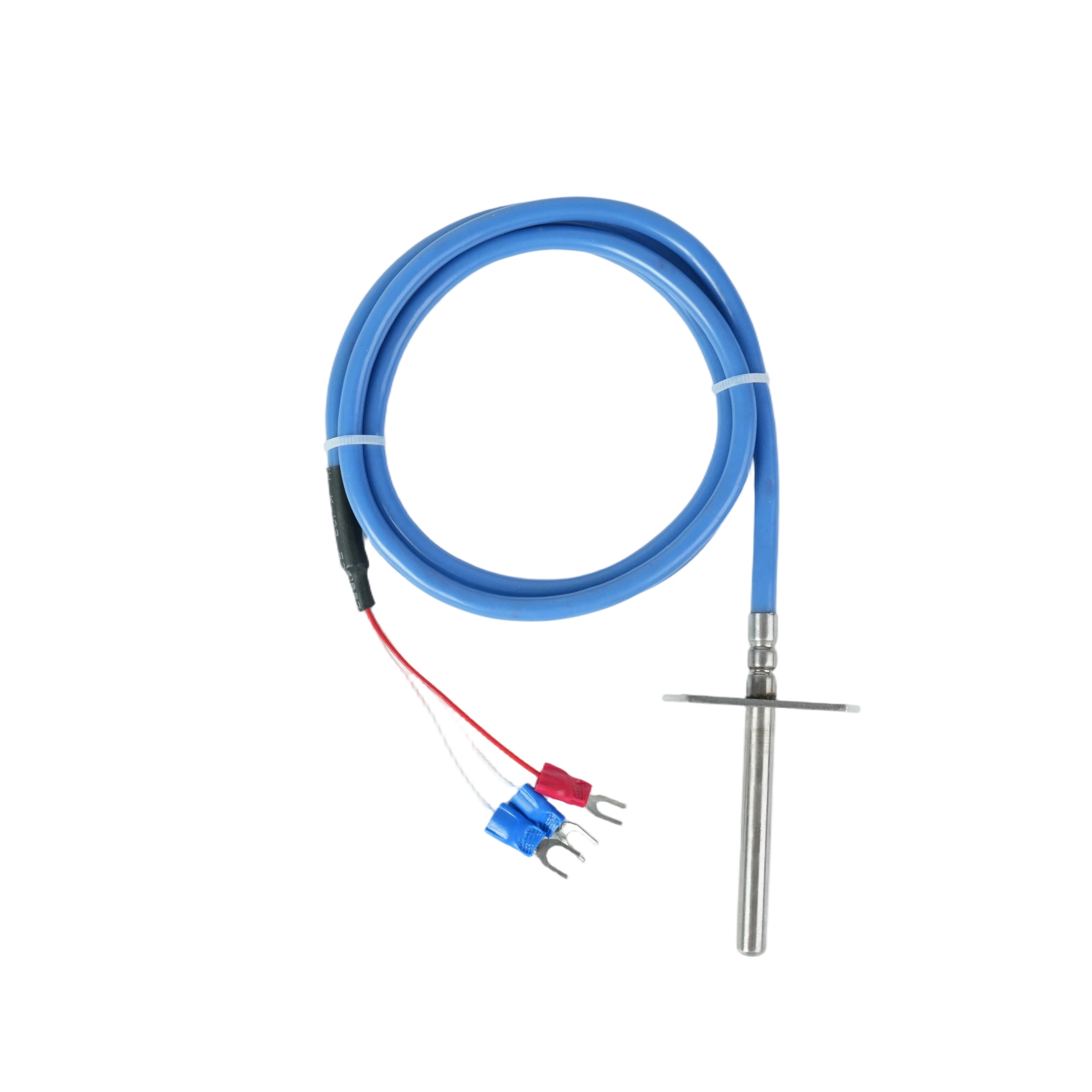
What Is an RTD Temperature Sensor?
RTD stands for resistance temperature detector. An RTD temperature sensor measures temperature by detecting changes in the electrical resistance of a sensing element.
As temperature changes, the resistance of the sensing element changes in a predictable way. The measurement system detects this resistance change and converts it into a temperature reading.
Common RTD sensors include PT100 and PT1000 sensors. PT100 has a nominal resistance of 100 ohms at 0°C, while PT1000 has a nominal resistance of 1000 ohms at 0°C.
Because of their stable and repeatable resistance characteristics, RTD sensors are commonly selected when consistent temperature measurement is required.
How Accurate Is an RTD Temperature Sensor?
The accuracy of an RTD temperature sensor depends on its design, sensing element, accuracy class, operating temperature, wiring method, and measurement system.
High-quality RTD sensors can provide highly consistent temperature measurements when they are correctly specified, installed, and connected to a suitable measurement instrument. However, it is important to distinguish between the accuracy of the sensing element and the accuracy of the complete temperature measurement system.
For example, even when an RTD element has excellent resistance characteristics, errors can be introduced by lead wires, electrical connections, installation location, signal conditioning, or the temperature transmitter connected to the sensor.
What Factors Affect RTD Sensor Accuracy?
1. RTD Sensor Type
Different RTD configurations can have different measurement characteristics. PT100 and PT1000 are two common choices, but the appropriate sensor depends on the required measurement range, system design, and measuring equipment.
When selecting an RTD sensor, consider the complete measurement system rather than evaluating the sensing element alone.
2. Accuracy Class
RTD elements are available in different accuracy classes. The specified tolerance indicates how closely the actual resistance-temperature relationship should correspond to the applicable standard.
For applications requiring tighter temperature control, selecting an RTD element with an appropriate accuracy class can help improve measurement performance.
3. Temperature Range
RTD accuracy can vary across the sensor's operating temperature range. A sensor that performs well at one temperature may have a different tolerance at another temperature.
Therefore, always compare the sensor's specified accuracy with the actual temperature range of the application.
4. Wiring Configuration
The wiring configuration can have a significant influence on RTD measurement accuracy. Common configurations include 2-wire, 3-wire, and 4-wire RTD connections.
A 2-wire configuration is simple but the resistance of the connecting wires can contribute to measurement error. A 3-wire configuration can compensate for much of the lead resistance when used with a suitable measurement circuit. A 4-wire configuration can provide more precise resistance measurement by separating the current and voltage measurement paths.
5. Lead Wire Resistance
Lead resistance is particularly important when measuring low-resistance RTD elements such as PT100. The resistance of the wires can be interpreted by the measurement system as part of the sensor resistance.
This is one reason why wiring configuration and cable selection should be considered when designing an RTD temperature measurement system.
6. Installation Conditions
Even a high-quality RTD temperature sensor may not provide an accurate reading if it is installed incorrectly. The sensing element should be positioned where it can properly detect the temperature of the target medium or surface.
Poor thermal contact, insufficient insertion depth, heat conduction through the mounting structure, or exposure to an unsuitable location can all influence the measured temperature.
7. Measurement Instrument
The RTD sensor and the measuring instrument work together as a complete measurement system. The transmitter, temperature controller, PLC input, data acquisition system, or other instrument must be compatible with the sensor.
Instrument accuracy, input configuration, signal processing, and calibration can therefore affect the final temperature reading.
PT100 vs. PT1000: Which Is More Accurate?
PT100 and PT1000 are both widely used RTD sensor types. The main difference is their nominal resistance at 0°C.
| Feature | PT100 | PT1000 |
|---|---|---|
| Nominal resistance at 0°C | 100 Ω | 1000 Ω |
| Common use | Industrial and general temperature measurement | Temperature measurement and control systems |
| Effect of lead resistance | More significant | Relatively smaller proportion of sensor resistance |
Neither type is automatically the best choice for every application. The appropriate RTD temperature sensor should be selected according to the measurement system, wiring configuration, operating range, and required accuracy.
How Does a 3-Wire or 4-Wire RTD Improve Accuracy?
One of the most common methods of improving RTD measurement accuracy is reducing the influence of lead resistance.
In a 3-wire RTD system, the measurement circuit can compensate for the resistance of the connecting wires when the wires have suitable characteristics.
A 4-wire RTD configuration goes further by using separate wires for supplying measurement current and measuring voltage. This can reduce the effect of lead resistance and is commonly considered when higher measurement accuracy is required.
The actual accuracy achieved still depends on the sensor, wiring, instrument, installation, and overall measurement system.
How to Improve RTD Temperature Measurement Accuracy
Select the appropriate RTD type: Choose PT100, PT1000, or another RTD configuration according to the application.
Choose a suitable accuracy class: Match sensor tolerance to the measurement requirements.
Use an appropriate wiring configuration: Consider 2-wire, 3-wire, or 4-wire connection requirements.
Use compatible measuring equipment: Make sure the transmitter, controller, or acquisition system supports the selected RTD.
Install the sensor correctly: Ensure sufficient thermal contact and appropriate sensor positioning.
Consider calibration: For applications requiring controlled measurement accuracy, periodic calibration can help identify measurement deviation.
Protect the sensing element: Select suitable probe materials and construction for the operating environment.
RTD Temperature Sensor Accuracy vs. Thermocouple Accuracy
RTDs and thermocouples are both widely used for temperature measurement, but they operate according to different principles.
An RTD measures temperature through changes in electrical resistance, while a thermocouple generates a voltage related to the temperature difference between its junctions.
RTDs are often selected when stable and repeatable temperature measurement is important. Thermocouples can be advantageous in applications involving very high temperatures, fast response, or specific environmental requirements.
The best sensor depends on the actual application rather than simply choosing the sensor with the highest theoretical accuracy.
Where Are Accurate RTD Sensors Used?
Accurate RTD temperature sensors are commonly used in applications where reliable temperature monitoring and control are important. These include industrial equipment, HVAC systems, process control, laboratory equipment, food processing equipment, and automation systems.
In these applications, accurate temperature information can help control processes, monitor equipment conditions, and maintain consistent operating parameters.
FAQs
What is the accuracy of an RTD temperature sensor?
RTD accuracy depends on the sensor type, accuracy class, temperature range, wiring configuration, installation, and measuring instrument. The actual specification should always be checked in the manufacturer's technical documentation.
Is an RTD more accurate than a thermocouple?
RTDs are often chosen for stable and repeatable temperature measurement, while thermocouples are widely used for high-temperature and fast-response applications. The appropriate choice depends on the application and required measurement performance.
Is PT100 or PT1000 more accurate?
PT100 and PT1000 can both provide reliable temperature measurement. Accuracy depends on the sensor specification and complete measurement system rather than resistance value alone.
Which RTD wiring is most accurate?
A 4-wire RTD configuration can reduce the influence of lead resistance and is commonly used when higher measurement accuracy is required. A 3-wire configuration is also widely used in industrial systems.
How can I improve RTD sensor accuracy?
Use an appropriate sensor accuracy class, suitable wiring configuration, compatible measurement instrument, correct installation, and regular calibration when required by the application.
An RTD temperature sensor can provide stable and reliable temperature measurement when the sensor and measurement system are correctly selected and installed. However, accuracy is influenced by much more than the sensing element itself.
Sensor type, accuracy class, temperature range, wiring configuration, lead resistance, installation conditions, and measurement equipment should all be considered when designing an RTD temperature measurement system.
For applications requiring dependable temperature monitoring, selecting the right RTD sensor based on the complete operating environment is the key to achieving consistent measurement performance.
