



Knowing where to place a meat thermometer is one of the most important steps when cooking a whole turkey. A thermometer can tell you whether the turkey has reached a safe internal temperature, but an incorrect placement may give you a reading that is warmer or cooler than the actual temperature of the meat.
So, where to stick a meat thermometer in a turkey? For a whole turkey, the thermometer should be used to check the thickest parts of the breast as well as the innermost parts of the thigh and wing. According to the USDA, the turkey should reach a minimum internal temperature of 165°F (73.9°C) in these areas.
Whether you are preparing a Thanksgiving turkey, Christmas dinner, or a regular roasted turkey, understanding the correct thermometer placement can help you achieve more reliable results.
Where Should You Put a Meat Thermometer in a Turkey?
For a whole turkey, there are three important areas to check:
The thickest part of the breast
The innermost part of the thigh
The innermost part of the wing
The USDA recommends checking these locations because different parts of a whole turkey can cook at different rates. The thickest sections are more likely to be the last areas to reach the target internal temperature.
When inserting the thermometer, avoid touching bone, fat, or gristle. The sensing tip should be positioned in the meat itself so that the thermometer measures the internal temperature of the turkey rather than the temperature of a nearby bone or cavity.
How to Check the Temperature of the Turkey Breast
The breast is one of the most important areas to check because it contains a large amount of meat and can cook differently from the legs and thighs.
Insert the thermometer into the thickest part of the breast. Position the probe so that the sensing tip is approximately in the center of the thickest section of meat rather than close to the surface.
Be careful not to push the probe all the way through the breast and into the cavity. If the sensing tip extends into an empty cavity, it may measure the air temperature instead of the internal temperature of the meat.
A probe with an appropriately sized sensing tip can make it easier to obtain a consistent reading without unnecessarily piercing a large area of the turkey.
Where to Check the Turkey Thigh Temperature
The thigh is another important location for checking a whole turkey. Insert the thermometer into the innermost part of the thigh, making sure the sensing tip is positioned in the thickest portion of the meat.
The thigh contains more connective tissue and has a different texture from breast meat, so checking its internal temperature is important when determining whether the entire turkey has been adequately cooked.
Avoid inserting the probe directly against the thigh bone. Bone can affect the reading and make it less representative of the surrounding meat.
Should You Check the Turkey Wing?
Yes. USDA guidance for a whole turkey also recommends checking the innermost part of the wing. The wing can cook differently from the breast and thigh, so checking multiple locations provides a more complete picture of the turkey's internal temperature.
When using a handheld thermometer, carefully position the probe in the thickest accessible section of the wing meat while avoiding the bone.
What Temperature Should Turkey Reach?
According to the USDA, all poultry, including turkey, should reach a minimum internal temperature of 165°F (73.9°C) as measured with a food thermometer.
| Turkey Area | Where to Insert the Probe | Minimum Temperature |
|---|---|---|
| Breast | Thickest part of the breast | 165°F (73.9°C) |
| Thigh | Innermost part of the thigh | 165°F (73.9°C) |
| Wing | Innermost part of the wing | 165°F (73.9°C) |
| Stuffing | Center of the stuffing | 165°F (73.9°C) |
If the turkey is stuffed, the stuffing should also reach at least 165°F (73.9°C). USDA guidance recommends cooking stuffing separately when possible because stuffing inside the bird may take longer to reach a safe temperature.
Where Not to Stick a Meat Thermometer in a Turkey
Knowing where not to place the thermometer is almost as important as knowing where to insert it.
1. Do Not Touch the Bone
Avoid positioning the sensing tip directly against a bone. The thermometer should measure the temperature of the surrounding meat.
2. Do Not Measure Only the Surface
The surface of a roasted turkey can become much hotter than the interior. Measuring near the surface may therefore give a misleading indication of whether the center of the meat has reached the required temperature.
3. Do Not Insert the Probe Into an Empty Cavity
The cavity does not represent the temperature of the meat. The probe should be inserted into the thickest portion of the meat.
4. Do Not Rely Only on the Color of the Meat
The color of cooked poultry is not a reliable indicator of safety. Turkey can vary in color even after reaching a safe internal temperature, so a food thermometer is the more reliable way to check doneness.
How Deep Should a Meat Thermometer Go Into a Turkey?
The probe should be inserted far enough for the sensing area to reach the center of the thickest portion of the meat.
The exact insertion depth depends on the size and design of the thermometer probe and the thickness of the turkey. The goal is not to insert the probe as deeply as possible, but to position the temperature-sensing area correctly.
For this reason, a probe with a suitable length and a clearly defined sensing tip can be useful when checking large poultry products.
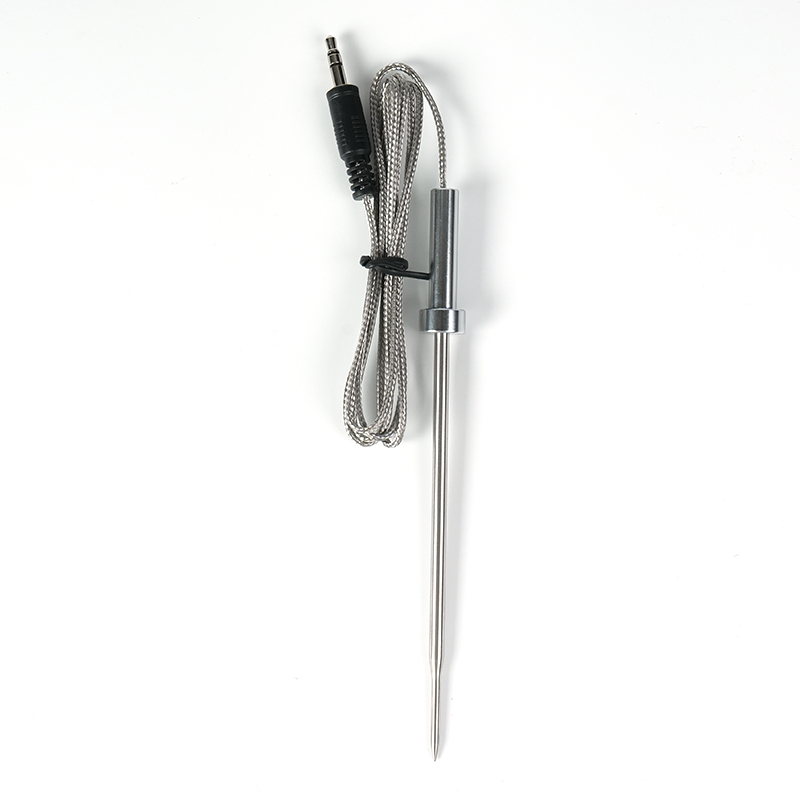
How to Use a meat probe With a Handle for Turkey
A handheld meat probe can be particularly convenient when checking a turkey during roasting. A probe with a handle allows the user to grip the thermometer securely while inserting the sensing tip into the meat.
For applications such as turkey, chicken, roast beef, pork, and other foods, a Meat Probe with handle can be used to measure internal food temperature during cooking.
When using a handheld meat probe, position the sensing tip in the thickest part of the meat and avoid contact with bones. The probe should remain stable long enough for the temperature reading to settle.
Why Is a Meat Probe Important for Large Turkeys?
A whole turkey can have significant differences in thickness between the breast, thigh, and wing. As a result, the outside of the bird may appear fully roasted while some internal areas are still below the recommended temperature.
This is why cooking time alone is not a substitute for temperature measurement. USDA guidance specifically recommends using a food thermometer to verify that the turkey reaches a minimum internal temperature of 165°F.
For large turkeys, checking multiple locations can also help identify the coolest areas and provide greater confidence that the entire bird has reached the recommended temperature.
When Should You Check the Turkey Temperature?
Start checking the temperature toward the end of the expected cooking time rather than relying solely on the cooking schedule.
Cooking time can vary depending on turkey size, oven temperature, whether the turkey is stuffed, the starting temperature of the bird, and the characteristics of the oven.
USDA recommends setting a conventional oven to at least 325°F when roasting turkey. Cooking times are estimates, so the internal temperature should ultimately be checked with a food thermometer.
Tips for Getting an Accurate Turkey Temperature Reading
Measure the thickest part: This is generally the slowest area to heat through.
Avoid bones: Position the sensing tip in the meat rather than against bone.
Check multiple areas: For a whole turkey, check the breast, thigh, and wing.
Wait for the reading to stabilize: Give the thermometer enough time to produce a stable measurement.
Clean the probe: Wash the food-contact portion according to the thermometer manufacturer's cleaning instructions.
Do not rely on appearance alone: Use internal temperature rather than color as the primary indicator of safe doneness.
Can the Same Meat Thermometer Be Used for Other Foods?
Yes. A suitable meat thermometer or temperature probe can be used for many foods, including chicken, beef, pork, lamb, roasts, steaks, and other cooked dishes.
The measurement principle remains the same: position the sensing area in the appropriate part of the food and avoid locations that can distort the reading, such as bones or areas that are unusually thin.
For food manufacturers and temperature-sensor suppliers, meat probes are also available in different shapes, cable configurations, handle designs, sensing technologies, and temperature ranges to meet different cooking and food-processing applications.
FAQ
Where do you stick a meat thermometer in a turkey?
For a whole turkey, check the thickest part of the breast and the innermost parts of the thigh and wing. Avoid touching bone and make sure the sensing tip is positioned inside the meat.
What temperature should a turkey be when it is done?
The USDA recommends a minimum internal temperature of 165°F (73.9°C) for turkey and other poultry.
Should I check the turkey breast or thigh?
For a whole turkey, it is better to check multiple areas rather than relying on only one location. USDA guidance recommends checking the thickest part of the breast and the innermost parts of the thigh and wing.
Can I put the thermometer in the turkey while it is cooking?
This depends on the type of thermometer. Some oven-safe leave-in probes are designed to remain in the food during cooking, while handheld instant-read thermometers are typically inserted when you want to check the temperature. Always follow the instructions for the specific thermometer.
Can I use a meat probe with a handle for turkey?
Yes. A meat probe with a handle can be used to check the internal temperature of turkey and other meats. The sensing tip should be placed in the thickest portion of the meat while avoiding bones and other structures that may affect the reading.
