



Choosing the right temperature measurement device is critical for industrial process control,automation,and quality management.Two of the most commonly used temperature sensors are RTD Temperature Sensors and thermocouples.
Although both are designed to measure temperature,they work differently and have unique advantages.Understanding the differences between an rtd temperature sensor vs thermocouple can help engineers and buyers select the best solution for their applications.
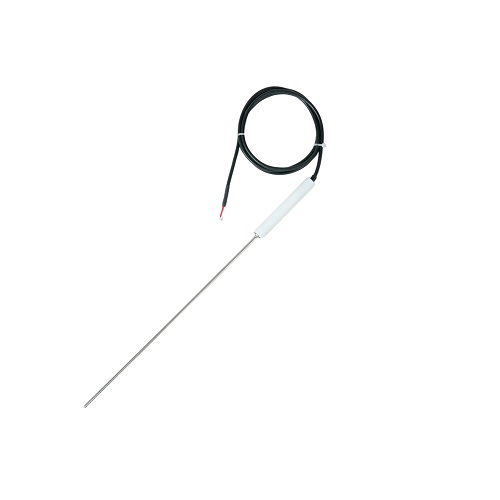
What Is an RTD Temperature Sensor?
An RTD temperature sensor(resistance temperature detector)measures temperature by detecting changes in electrical resistance.As temperature increases,the resistance of the sensing element changes in a predictable way,allowing accurate temperature measurement.
The most common RTD materials include platinum,with popular models such as:
PT1000 Temperature Sensor
RTD sensors are widely recognized for their excellent accuracy,long-term stability,and repeatability.
What Is a Thermocouple?
A thermocouple is a temperature sensor made by joining two different metal wires together.When exposed to temperature changes,the junction produces a small voltage that can be measured and converted into temperature readings.
Common thermocouple types include:
Type K Thermocouple
Type J Thermocouple
Type T Thermocouple
Type E Thermocouple
Type N Thermocouple
Thermocouples are popular because of their wide temperature range,fast response time,and ability to operate in harsh environments.
RTD Temperature Sensor vs Thermocouple Comparison
| Feature | RTD Temperature Sensor | Thermocouple |
|---|---|---|
| Accuracy | Higher accuracy | Moderate accuracy |
| Temperature Range | Usually -200°C to 600°C | Can exceed 2000°C |
| Response Time | Slower | Faster |
| Stability | Excellent long-term stability | More prone to drift |
| Signal Output | Resistance change | Voltage signal |
| Durability | Good | Excellent in harsh environments |
| Cost | Higher | Lower |
| Best Application | Precision measurement | Extreme temperature measurement |
Accuracy:RTD Temperature Sensor Has the Advantage
One of the biggest advantages of an RTD temperature sensor is measurement accuracy.
RTD sensors typically provide:
Better temperature accuracy
Higher repeatability
Lower measurement errors
Better long-term stability
For industries requiring precise temperature control,such as pharmaceutical manufacturing,food processing,and laboratory testing,PT100 temperature sensors are often preferred.
Thermocouples,while reliable,usually have lower accuracy due to factors such as:
Material aging
Signal noise
Calibration changes
Environmental interference
Temperature Range:Thermocouples Perform Better
When extreme temperatures are involved,thermocouples often outperform RTD sensors.
Thermocouples can measure:
Very high furnace temperatures
Metal processing temperatures
Combustion environments
High-temperature industrial equipment
An RTD temperature sensor is typically suitable for medium-temperature applications where accuracy is more important than extreme range.
Response Time:Thermocouples Are Faster
Thermocouples generally respond faster because they have:
Smaller sensing elements
Lower thermal mass
Direct temperature measurement method
This makes thermocouples suitable for applications requiring rapid temperature changes.
However,modern RTD temperature probes with optimized designs can also provide fast response times for many industrial applications.
Durability and Environmental Resistance
Both sensors can be designed for demanding environments.
A thermocouple is often preferred for:
High vibration environments
Extreme heat
Industrial furnaces
Engines
Boilers
An industrial RTD temperature sensor is better suited for:
Process control systems
Food production
Chemical monitoring
HVAC systems
Precision equipment
With proper protection such as stainless steel probes and waterproof structures,RTD sensors can achieve excellent durability.
Wiring Differences Between RTD and Thermocouple
RTD sensors typically use:
2-wire RTD
3-wire RTD
4-wire RTD
Among them,the 3-wire RTD is the most common industrial choice because it balances cost and accuracy.
A 4-wire RTD provides the highest accuracy by eliminating lead resistance errors.
Thermocouples require different considerations,including:
Extension wires
Cold junction compensation
Signal conditioning
The wiring method directly affects measurement reliability.
Application Comparison
Applications Suitable for RTD Temperature Sensors
RTD temperature sensors are commonly used in:
Food processing equipment
Pharmaceutical systems
HVAC control
Industrial automation
Chemical processing
Water treatment
Precision manufacturing
Laboratory equipment
Applications Suitable for Thermocouples
Thermocouples are commonly used in:
Furnaces
Kilns
Heat treatment equipment
Gas turbines
Boilers
Engines
Aerospace systems
High-temperature processing
Which One Should You Choose?
The choice between an RTD temperature sensor and thermocouple depends on your application requirements.
Choose an RTD temperature sensor if you need:
Higher accuracy
Better stability
Reliable long-term measurement
Precise process control
Moderate temperature measurement
Choose a thermocouple if you need:
Extremely high temperature measurement
Faster response time
Lower initial cost
Operation in harsh environments
How to Select a Reliable Temperature Sensor Manufacturer
Whether you choose an RTD temperature sensor manufacturer or thermocouple supplier,consider:
Product quality
Sensor accuracy
Manufacturing capability
Customization options
Testing standards
Industry experience
Technical support
A professional RTD temperature sensor supplier can provide customized solutions including:
PT100 sensors
PT1000 sensors
Waterproof RTD probes
Industrial temperature sensors
OEM temperature measurement solutions
Both RTD temperature sensors and thermocouples play important roles in industrial temperature measurement.Thermocouples are ideal for extreme temperature environments and fast response applications,while RTD sensors provide superior accuracy,stability,and repeatability.
For applications requiring precise and reliable temperature monitoring,an RTD temperature sensor is often the better choice.However,selecting the right sensor depends on temperature range,accuracy requirements,environmental conditions,and system compatibility.
By understanding the differences between RTD temperature sensor vs thermocouple,engineers can choose the most suitable solution for improved efficiency,safety,and process control.
FAQ
1.Is an RTD temperature sensor more accurate than a thermocouple?
Yes.RTD temperature sensors generally provide higher accuracy,better repeatability,and greater long-term stability compared with thermocouples.
2.Which sensor works better at high temperatures?
Thermocouples are usually better for extremely high-temperature applications because they can measure temperatures beyond the typical range of RTD sensors.
3.Are PT100 and PT1000 sensors RTD sensors?
Yes.PT100 and PT1000 are two common types of platinum RTD temperature sensors used for industrial temperature measurement.
4.Which sensor is better for industrial applications?
It depends on the application.RTD sensors are preferred for accurate process control,while thermocouples are commonly selected for high-temperature and harsh environments.
