



A RTD Temperature Sensor(resistance temperature detector)is a highly accurate device used to measure temperature by detecting changes in electrical resistance.It is widely used in industrial systems,laboratories,and precision equipment where stable and reliable temperature measurement is required.
Unlike simpler sensors,an RTD provides very consistent readings over time,which makes it one of the most trusted temperature sensing technologies in modern engineering.
In this article,we will explain how a rtd temperature sensor works,its structure,principles,applications,and why it is preferred in many industries.
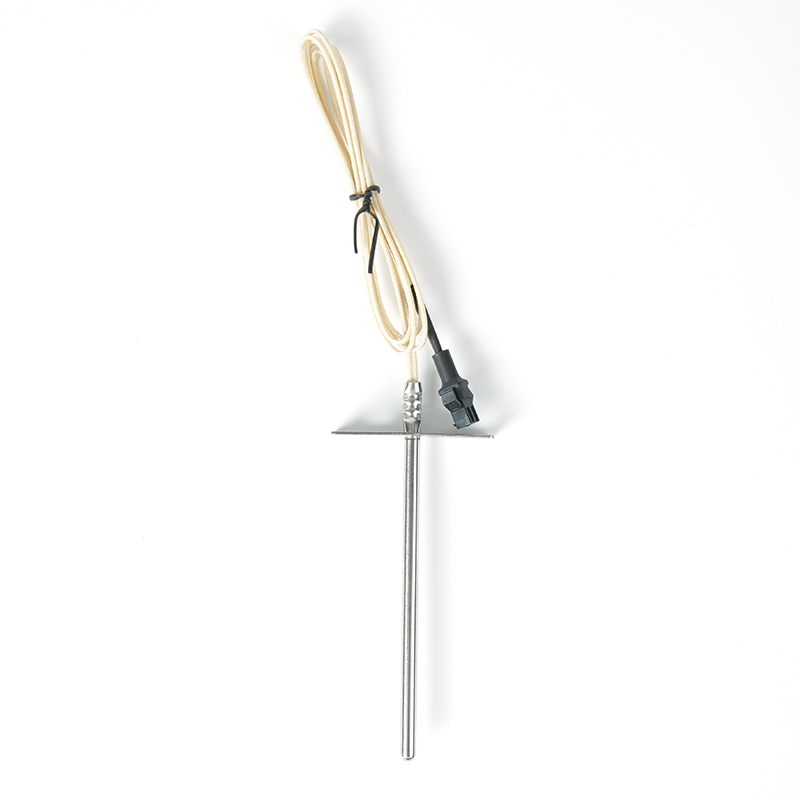
What Is a RTD Temperature Sensor?
A rtd temperature sensor is a type of temperature detector that uses a pure metal element—most commonly platinum—to measure temperature changes through resistance variation.
The basic principle is simple:
When temperature increases,electrical resistance increases
When temperature decreases,electrical resistance decreases
This predictable behavior allows precise temperature calculation.
Because of its stability and accuracy,RTDs are commonly used in industrial and scientific environments where reliability is essential.
Working Principle of RTD Temperature Sensor
The working principle of a sensor temperature rtd is based on the relationship between temperature and resistance in metals.
Inside the sensor,there is a fine platinum wire or thin film element.When electric current passes through it,the resistance is measured.As temperature changes,the resistance changes in a very stable and repeatable way.
Step-by-step working process:
A small electrical current is sent through the RTD element
The metal element responds to surrounding temperature
Resistance changes according to temperature level
The measuring device detects this resistance
The system converts resistance into temperature value
This process is highly accurate because platinum has a near-linear resistance-temperature relationship.
Why Platinum Is Used in RTD Sensors
Most rtd pt100 temperature sensor designs use platinum because of its excellent properties:
Extremely stable over time
Resistant to corrosion and oxidation
Predictable and linear resistance behavior
Works in a wide temperature range
The“Pt100”means the sensor has 100 ohms resistance at 0°C,which is a global industrial standard.
There is also Pt1000,which has 1000 ohms resistance at 0°C and is often used for long-distance measurement or environments with electrical noise.
Types of RTD Temperature Sensors
RTDs can be categorized based on construction and application:
1.Wire-Wound RTD
Very accurate
Made of fine platinum wire
Used in laboratory environments
2.Thin-Film RTD
More compact and durable
Suitable for industrial applications
Lower cost compared to wire-wound type
3.Industrial RTD Sensors
These are designed for harsh environments and are known as industrial rtd temperature sensors.They are used in factories,chemical plants,power systems,and automation lines where reliability is critical.
How RTD Converts Resistance into Temperature
The relationship between resistance and temperature is defined by standardized equations(such as IEC 60751).
In simple terms:
At 0°C→Pt100=100Ω
At 100°C→resistance increases predictably
At higher temperatures→resistance continues increasing
A transmitter or controller measures this resistance and converts it into temperature using calibration curves.
This is why RTDs are considered one of the most precise temperature measurement devices available.
Advantages of RTD Temperature Sensors
RTD technology offers several important benefits:
1.High Accuracy
RTDs can achieve very precise measurements,often within±0.1°C.
2.Excellent Stability
They maintain accuracy over long periods without frequent recalibration.
3.Wide Temperature Range
They typically operate between-200°C and 600°C.
4.Repeatable Performance
Every measurement remains consistent under the same conditions.
These advantages make RTDs the preferred choice in critical systems.
Applications of RTD Temperature Sensors
RTDs are widely used across multiple industries:
Industrial Manufacturing
Machines and production systems use RTDs to prevent overheating and ensure stable operation.
HVAC Systems
Heating and cooling systems rely on RTDs for accurate temperature control and energy efficiency.
Food Industry
Temperature control is essential for safety and quality during processing and storage.
Laboratory&Research
Scientific experiments require precise and stable temperature monitoring.
Automotive&Aerospace
Engines,exhaust systems,and environmental control systems use RTDs for safety and performance.
Consumer Applications
Some grilling systems,such as the traeger rtd temperature sensor,are used in smokers and grills to maintain consistent cooking temperatures.
RTD vs Other Temperature Sensors
RTDs are often compared with thermocouples and thermistors:
| Sensor Type | Accuracy | Speed | Temperature Range | Stability |
| RTD | High | Medium | Wide | Excellent |
| Thermocouple | Medium | Fast | Very Wide | Moderate |
| Thermistor | Very High (small range) | Fast | Limited | Low–Medium |
RTDs are the best choice when accuracy and stability matter more than speed.
Limitations of RTD Sensors
Although RTDs are highly reliable,they do have some limitations:
Higher cost compared to other sensors
Slower response time
Requires proper wiring(2-wire,3-wire,or 4-wire systems)
Not ideal for extremely high-temperature applications beyond 600°C
Despite these limitations,their accuracy makes them essential in many systems.
Installation and Wiring Considerations
Proper installation is critical for accurate readings:
Use correct wiring type(3-wire or 4-wire preferred for accuracy)
Avoid long unprotected cable runs
Protect sensor from vibration and moisture
Ensure proper thermal contact with the measured medium
Good installation ensures stable performance of any sensor temperature rtd system.
Future Development of RTD Technology
RTD sensors continue to evolve with modern industry demands:
Integration with digital monitoring systems
Smaller and more durable designs
Improved response time
Enhanced performance in harsh environments
As automation grows,RTDs will remain a core part of temperature measurement systems worldwide.
FAQ
1.How does a RTD temperature sensor measure temperature?
A RTD measures temperature by detecting changes in the electrical resistance of a platinum element.As temperature increases or decreases,resistance changes in a predictable way.
2.What makes a RTD more accurate than other sensors?
RTDs use platinum,which has a very stable and linear resistance-temperature relationship,allowing highly accurate and repeatable measurements.
3.What is the difference between Pt100 and Pt1000 RTD sensors?
Pt100 has 100 ohms at 0°C,while Pt1000 has 1000 ohms.Pt1000 is less affected by electrical noise and is better for long cable runs.
4.Where are industrial RTD sensors commonly used?
industrial rtd temperature sensors are widely used in manufacturing,HVAC systems,food processing,energy plants,and automation systems where precise temperature control is required.
