



An RTD Temperature Sensor(resistance temperature detector)is one of the most accurate and stable devices used for measuring temperature in modern industrial and scientific applications.It works on a simple but highly reliable principle:the electrical resistance of certain metals changes in a predictable way when temperature changes.
In most cases,the sensing element is made from platinum,which is why you will often hear terms like rtd pt100 temperature sensor or Pt1000.Because of its precision and long-term stability,the RTD has become a standard solution in industries where temperature accuracy is critical.
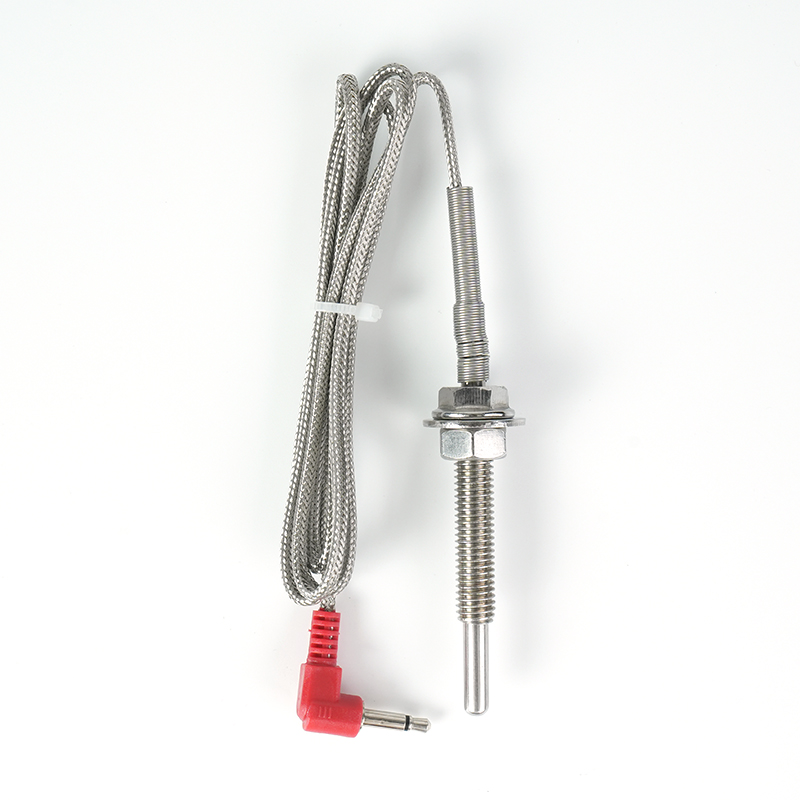
How Does a rtd temperature sensor Work?
The working principle of a rtd temperature sensor is based on resistance variation in metals.
Inside the sensor,there is a thin wire or film made of pure platinum.When temperature increases,the atoms in the metal vibrate more intensely,making it harder for electrons to flow.As a result,electrical resistance increases.
This relationship is very stable and almost linear,which means temperature can be calculated accurately by measuring resistance.
Higher temperature→higher resistance
Lower temperature→lower resistance
A measurement device or controller sends a small electrical current through the sensor and reads the resistance value.Then it converts this signal into temperature using standardized calibration tables.
This is why a sensor temperature rtd system is widely used in precision applications.
Common Types of RTD Sensors
RTDs come in different configurations,but the most widely used are:
1.Pt100 RTD
Resistance:100 ohms at 0°C
Most common industrial standard
High accuracy and stability
2.Pt1000 RTD
Resistance:1000 ohms at 0°C
Better signal strength over long distances
Less affected by electrical noise
Both types are part of the rtd pt100 temperature sensor family and are used depending on system requirements.
Key Features of RTD Temperature Sensors
RTD sensors are preferred in many industries because of their unique advantages:
1.High Accuracy
RTDs provide very precise readings,often within±0.1°C to±0.3°C depending on the system.
2.Excellent Stability
Unlike other sensors,RTDs do not drift easily over time,making them reliable for long-term use.
3.Wide Temperature Range
They typically operate from-200°C to 600°C,covering most industrial applications.
4.Linear Output
The resistance-temperature relationship is nearly linear,which simplifies calibration and measurement.
Because of these features,industrial rtd temperature sensors are widely used in automation and process control systems.
Applications of RTD Temperature Sensors
RTD sensors are found in many industries where temperature control is critical.
Industrial Manufacturing
Used in machines,motors,and production lines to monitor overheating and ensure safe operation.
HVAC Systems
Helps regulate heating,ventilation,and air conditioning systems for energy efficiency and comfort.
Food Processing
Ensures correct temperature during cooking,freezing,and storage to maintain safety standards.
Laboratory Equipment
Used in scientific experiments where precise temperature control is required.
Automotive&Aerospace
Monitors engine temperature,exhaust systems,and environmental control systems.
Consumer Products
Some grilling systems and smokers use specialized versions like the traeger rtd temperature sensor to maintain consistent cooking temperatures.
RTD vs Other Temperature Sensors
RTDs are often compared with thermocouples and thermistors.
RTD sensors:High accuracy,stable,slower response
Thermocouples:Wide range,fast response,less accurate
Thermistors:Very sensitive,limited temperature range
If precision is the priority,RTDs are usually the best choice.
Advantages of RTD Temperature Sensors
High precision and repeatability
Long-term stability
Suitable for industrial environments
Minimal calibration requirements
Reliable performance in harsh conditions
These benefits explain why industrial rtd temperature sensors are a standard in process industries such as chemical plants,oil refineries,and power generation.
Limitations of RTD Sensors
Despite their advantages,RTDs also have some limitations:
More expensive than thermistors
Slower response time compared to thermocouples
Requires careful wiring(especially for long-distance measurement)
Can be sensitive to vibration in some applications
Understanding these limitations helps in selecting the right temperature measurement solution.
Installation Considerations
When installing an RTD system,several factors should be considered:
Proper insulation to avoid electrical interference
Correct wiring configuration(2-wire,3-wire,or 4-wire)
Appropriate placement in the measurement environment
Protection against moisture,vibration,and corrosion
Proper installation ensures accurate and stable performance of any rtd temperature sensor system.
Future of RTD Technology
With increasing demand for automation and precision control,RTD sensors are becoming more advanced.Modern designs focus on:
Faster response times
Improved miniaturization
Digital output integration
Enhanced durability for harsh environments
As industries continue to automate,the importance of accurate temperature measurement systems like the RTD will only increase.
FAQ
1.What is a RTD temperature sensor used for?
A RTD temperature sensor is used to measure temperature accurately in industrial,laboratory,and commercial applications.It is commonly used where precision and stability are important.
2.Why is platinum used in RTD sensors?
Platinum is chemically stable,resistant to corrosion,and has a very predictable resistance-temperature relationship,making it ideal for accurate measurement.
3.What is the difference between Pt100 and Pt1000?
Pt100 has 100 ohms resistance at 0°C,while Pt1000 has 1000 ohms.Pt1000 is less affected by electrical noise,making it better for long-distance measurement.
4.What industries use RTD sensors the most?
Industries such as manufacturing,HVAC,food processing,automotive,aerospace,and energy production widely use RTD sensors for temperature monitoring and control.
