Platinum RTDs and thermistors are both resistance-based temperature sensors, but they have different operating characteristics and are designed for different temperature measurement requirements. Platinum RTDs are known for stability, accuracy, and a relatively wide temperature range, while thermistors are often selected for their high sensitivity and fast response.
Understanding the differences between a platinum RTD and a thermistor can help engineers and equipment manufacturers select the right temperature sensor for their application.
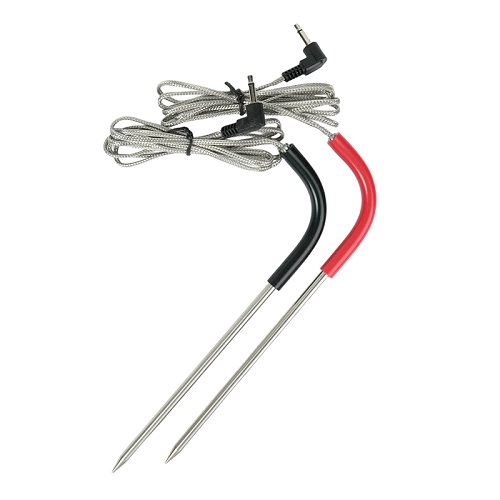
What Is a Platinum RTD?
A platinum RTD, or resistance temperature detector, uses platinum as the sensing element. Its electrical resistance changes predictably as temperature changes. PT100 and PT1000 are two common examples of platinum rtd sensors.
Platinum RTDs are widely used in industrial process control, HVAC systems, machinery, laboratory equipment, and other applications that require stable and accurate temperature measurement.
What Is a Thermistor?
A thermistor is a temperature-sensitive resistor, typically made from semiconductor materials. Its resistance changes significantly with temperature, making it highly sensitive to relatively small temperature changes.
The two common types are NTC and PTC thermistors. ntc thermistors decrease in resistance as temperature increases, while PTC thermistors increase in resistance as temperature increases.
Platinum RTD vs Thermistor: Key Differences
| Feature | Platinum RTD | Thermistor |
|---|---|---|
| Sensing Material | Platinum | Semiconductor material |
| Temperature Response | Predictable and relatively linear | Highly nonlinear |
| Temperature Range | Generally wide | Generally narrower |
| Sensitivity | Moderate | High over a selected range |
| Stability | Excellent long-term stability | Depends on material and construction |
| Response Time | Depends on probe construction | Often very fast |
| Typical Applications | Industrial temperature measurement | Electronics, appliances, HVAC, battery systems |
Which Has a Wider Temperature Range?
Platinum RTDs generally provide a wider usable temperature range than standard thermistors. This makes them suitable for industrial processes and environments where temperatures vary significantly.
Thermistors are often optimized for a specific temperature range. Within that range, they can provide high sensitivity and useful temperature measurement performance.
Which Is More Accurate?
Platinum RTDs are commonly selected when stable and accurate temperature measurement is required over a relatively broad temperature range. Their resistance-temperature relationship is well characterized and can provide consistent measurement performance.
Thermistors can also provide excellent accuracy within their designed operating range. Their high sensitivity makes them useful for detecting small temperature changes, but their nonlinear response requires suitable signal processing or calibration.
Which Has a Faster Response?
Thermistors can offer very fast response times because sensing elements can be manufactured in small sizes. However, response time is strongly affected by the sensor's physical construction, housing, mounting method, and surrounding medium.
A small platinum RTD can also provide a fast response, while a larger industrial RTD probe may respond more slowly because of its protective sheath and construction.
Platinum RTD or Thermistor: Which Should You Choose?
A platinum RTD is often a better choice when the application requires long-term stability, a wide temperature range, predictable performance, and industrial-grade temperature measurement.
A thermistor can be a suitable choice when high sensitivity, compact size, fast response, and cost-effective temperature sensing are more important, particularly within a defined temperature range.
Common Applications
| Platinum RTD Applications | Thermistor Applications |
|---|---|
| Industrial process control | Consumer electronics |
| HVAC systems | Home appliances |
| Industrial machinery | Battery temperature monitoring |
| Laboratory equipment | Electronic devices |
| Process temperature monitoring | Automotive electronics |
What Factors Should You Consider?
Temperature range: Determine the minimum and maximum operating temperatures.
Required accuracy: Define the acceptable measurement tolerance.
Response time: Consider how quickly the sensor needs to detect temperature changes.
Long-term stability: Industrial applications may require consistent performance over extended periods.
Sensor size: Check the available installation space and required probe dimensions.
Environmental conditions: Consider moisture, vibration, chemicals, pressure, and mechanical stress.
Control system compatibility: Make sure the sensor output is compatible with the measurement or control equipment.
Custom Temperature Sensor Solutions
For equipment manufacturers and industrial buyers, temperature sensors can be customized according to application requirements. Platinum RTDs can be designed with different probe lengths, diameters, cable configurations, connectors, mounting threads, protective housings, and sensing elements.
Thermistors can also be customized in terms of resistance value, B-value, dimensions, lead wire, encapsulation, and operating temperature range.
Selecting the right sensor design can help improve temperature measurement reliability and simplify integration into industrial equipment and control systems.
Conclusion
Platinum RTDs and thermistors both provide effective temperature measurement, but they serve different application requirements. Platinum RTDs are commonly preferred for accuracy, stability, and wider temperature measurement, while thermistors offer high sensitivity, compact designs, and fast response within specific temperature ranges.
The right temperature sensor should be selected according to temperature range, accuracy, response time, installation conditions, system compatibility, and long-term operating requirements.