



Choosing the right high temperature RTD is essential when accurate and stable temperature measurement is required in demanding industrial environments. rtd sensors are widely used because of their predictable resistance-temperature relationship, good repeatability, and excellent measurement stability. However, selecting an RTD for high-temperature applications requires more than simply choosing a PT100 or PT1000 element.
Temperature range, sensing element, accuracy, probe construction, sheath material, response time, installation method, wiring configuration, and environmental conditions can all affect sensor performance. A suitable high temperature RTD sensor should match the actual operating conditions of the equipment and the requirements of the measurement system.
This guide explains the most important factors to consider when selecting a high temperature RTD for industrial and commercial applications.
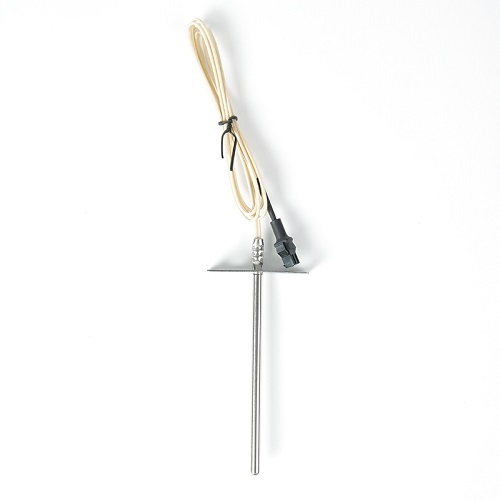
What Is a High Temperature RTD?
An RTD, or resistance temperature detector, measures temperature by detecting the change in electrical resistance of a temperature-sensitive element. As temperature changes, the resistance of the sensing element changes in a predictable way, allowing an electronic instrument to calculate the corresponding temperature.
Platinum is the most common sensing material for precision RTDs because of its stable and repeatable resistance-temperature characteristics. Common configurations include PT100 and PT1000, where the number represents the nominal resistance at 0°C.
A high temperature RTD is designed for applications where temperatures are significantly higher than those encountered in typical ambient or low-temperature measurement environments. The sensor's actual maximum operating temperature depends on the sensing element, insulation, sheath, cable, construction, and other components.
1. Determine the Required Temperature Range
The first factor to consider is the actual temperature range of the application.
Determine the minimum and maximum temperatures that the sensor will experience during normal operation. You should also consider temporary temperature peaks, startup conditions, shutdown conditions, and thermal cycling.
For example, a process that normally operates at 400°C may occasionally reach a substantially higher temperature. Selecting a sensor based only on the normal operating point could result in insufficient temperature capability.
It is generally better to choose a sensor with an appropriate operating margin rather than continuously operating at the absolute upper limit of its specifications.
2. Choose the Appropriate RTD Element
The sensing element is another important consideration. Platinum RTDs are widely used in industrial temperature measurement because of their predictable characteristics and long-term stability.
PT100 has a nominal resistance of 100 ohms at 0°C, while PT1000 has a nominal resistance of 1,000 ohms at 0°C.
The choice between PT100 and PT1000 depends on the measurement electronics, wiring arrangement, required sensitivity, lead resistance, and application design.
For a new system, engineers should consider the complete measurement circuit rather than selecting the element based only on its nominal resistance.
3. Consider Accuracy Requirements
High temperature does not automatically mean that every application requires the highest possible accuracy. The required accuracy depends on the process and the consequences of temperature measurement errors.
Applications such as industrial ovens, laboratory equipment, process control systems, chemical processing, and manufacturing equipment may have different accuracy requirements.
When evaluating an RTD, consider the sensor's tolerance class, calibration requirements, stability, measurement electronics, and installation conditions.
It is also important to evaluate accuracy across the actual temperature range. A sensor may have excellent performance at moderate temperatures but experience different levels of uncertainty as the temperature approaches its upper operating limit.
4. Select the Right Sheath Material
The protective sheath is particularly important for a high temperature RTD probe. It protects the sensing element from mechanical damage and the surrounding environment.
Common sheath materials include stainless steel and other alloys selected for specific temperature and chemical conditions.
When choosing a sheath material, consider:
Maximum operating temperature
Resistance to oxidation
Resistance to corrosion
Exposure to chemicals
Mechanical strength
Pressure conditions
Thermal cycling
Compatibility with the process medium
The best sheath material is not necessarily the most expensive option. It should provide the appropriate combination of temperature resistance, chemical compatibility, mechanical strength, and service life.
5. Evaluate the Installation Environment
The environment surrounding the sensor can have a major impact on its performance.
Before selecting a high temperature RTD, determine whether the sensor will be exposed to moisture, steam, oil, chemicals, dust, vibration, pressure, or corrosive gases.
For example, an RTD used in a dry industrial oven may have very different protection requirements from one installed in a chemical processing system.
If the sensor is exposed to harsh conditions, the probe construction, sealing, sheath material, cable, and connector should all be evaluated as part of the complete assembly.
6. Consider Response Time
Response time describes how quickly an RTD reacts to a change in temperature.
A smaller probe diameter generally allows faster thermal response because there is less material between the process and the sensing element. However, reducing probe size may also affect mechanical strength and durability.
If the temperature changes rapidly, such as in certain industrial heating and cooling processes, response time can be an important selection factor.
For processes where temperature changes slowly, a slightly slower response may be acceptable if the larger probe provides better mechanical protection.
7. Select the Appropriate Wiring Configuration
RTDs are commonly available in 2-wire, 3-wire, and 4-wire configurations.
A 2-wire RTD is simple and economical, but the resistance of the lead wires can introduce measurement error. A 3-wire configuration can compensate for much of the lead resistance and is widely used in industrial temperature measurement.
A 4-wire RTD can provide more precise resistance measurement by minimizing the effect of lead resistance, making it useful for applications where high measurement accuracy is important.
| Configuration | Typical Advantage | Consideration |
|---|---|---|
| 2-wire | Simple and cost-effective | Lead resistance can affect accuracy |
| 3-wire | Good balance between accuracy and cost | Requires compatible measurement equipment |
| 4-wire | High measurement accuracy | More wiring and generally higher cost |
8. Check the Probe Diameter and Length
The physical dimensions of the RTD should match the installation space and measurement requirements.
A probe that is too short may not reach the correct measurement point, while an excessively long probe may create unnecessary installation difficulties.
Probe diameter also affects response time, mechanical strength, and installation compatibility. Smaller diameters can provide faster response, while larger diameters may provide improved mechanical durability.
For custom industrial temperature sensors, probe length, diameter, insertion depth, mounting thread, and connection structure can often be customized according to the equipment.
9. Consider Pressure and Mechanical Stress
Some high-temperature applications also involve elevated pressure or significant mechanical vibration.
Examples include industrial processing equipment, engines, pumps, pipelines, and specialized machinery.
In these environments, the sensor should have sufficient mechanical strength and appropriate sealing. The mounting method should also be designed to prevent excessive vibration or movement from damaging the sensor.
10. Evaluate Chemical Compatibility
Temperature alone should not determine the probe material.
If the RTD is exposed to chemicals, gases, liquids, or corrosive process media, the sheath and other exposed components must be compatible with those substances.
Chemical compatibility can affect the long-term reliability of the sensor. Corrosion or material degradation may eventually cause measurement errors or mechanical failure.
For demanding environments, provide the manufacturer with information about the process medium, concentration, pressure, and operating temperature so that an appropriate construction can be recommended.
11. Consider Thermal Cycling and Long-Term Stability
Repeated heating and cooling can place mechanical stress on an RTD assembly. High-temperature applications with frequent thermal cycling may therefore require a sensor specifically designed for long-term stability.
When selecting an industrial RTD sensor, consider the expected number of thermal cycles, heating and cooling rates, maximum temperature, and required service life.
Long-term stability is especially important in industrial systems where replacing a failed temperature sensor can result in equipment downtime or production losses.
12. Check the Cable and Connection Method
The cable and connection system must also withstand the application's temperature and environmental conditions.
Standard cable insulation may not be appropriate for high-temperature environments. Depending on the installation, manufacturers may offer high-temperature cables, mineral-insulated structures, metal-sheathed assemblies, or remote connection configurations.
The connection method may include terminal blocks, connectors, extension wires, threaded connections, or customized interfaces.
When specifying a sensor, make sure the cable and connection components are rated for the actual environment rather than evaluating only the RTD element itself.
13. Check Calibration and Testing Requirements
For applications where measurement accuracy is critical, calibration and testing should be considered before purchasing the sensor.
Ask the manufacturer what inspection and testing procedures are available and whether calibration documentation can be provided when required.
Depending on the application, testing may include resistance checks, insulation checks, dimensional inspection, temperature calibration, leak testing, and final visual inspection.
For large-volume purchases, consistent testing and quality-control procedures are particularly important because sensor-to-sensor variation can affect system performance.
High Temperature RTD Selection Checklist
| Factor | Key Question |
|---|---|
| Temperature range | What are the minimum, normal, maximum, and peak temperatures? |
| RTD element | Should the application use PT100, PT1000, or another configuration? |
| Accuracy | What measurement tolerance is required? |
| Sheath | Can the sheath withstand temperature, corrosion, and mechanical stress? |
| Response time | How quickly must the sensor react to temperature changes? |
| Wiring | Is 2-wire, 3-wire, or 4-wire measurement appropriate? |
| Dimensions | What probe diameter, length, and insertion depth are required? |
| Environment | Will the sensor encounter moisture, chemicals, pressure, vibration, or thermal cycling? |
| Connection | What cable, connector, and mounting method are required? |
| Calibration | Is calibration or test documentation required? |
High Temperature RTD vs. Thermocouple
Thermocouples are another common solution for high-temperature measurement. They can operate at very high temperatures and are available in many different types.
RTDs, particularly platinum RTDs, are often selected when measurement accuracy, repeatability, and stability are important. Thermocouples may be preferred when extremely high temperatures, fast response, ruggedness, or specific installation requirements are the priority.
There is no universal winner between an RTD and a thermocouple. The best choice depends on the required temperature range, accuracy, response time, environment, installation, and measurement system.
Applications of High Temperature RTD Sensors
High temperature RTDs can be used in a variety of industrial environments, including:
Industrial ovens and furnaces
Heat treatment equipment
Process control systems
Chemical processing equipment
Food processing machinery
HVAC and heating systems
Industrial manufacturing equipment
Engines and machinery
Energy and power equipment
Laboratory and testing equipment
In each application, the sensor construction should be selected according to the actual temperature and environmental conditions rather than relying on a standard configuration.
How to Choose a High Temperature RTD Manufacturer?
For OEM projects and industrial purchasing, the quality of the manufacturer can be just as important as the sensor specification.
A reliable high temperature RTD manufacturer should be able to provide consistent sensing elements, suitable probe materials, customized dimensions, appropriate cable configurations, and quality-control procedures.
When comparing suppliers, consider their experience with industrial temperature sensors, customization capabilities, production consistency, testing procedures, technical support, and ability to provide documentation for your target application.
For custom projects, it is useful to provide the manufacturer with your temperature range, required accuracy, probe dimensions, installation method, process environment, wiring configuration, and expected order quantity. This allows the supplier to recommend a more appropriate sensor structure.
Selecting the right high temperature RTD requires a complete understanding of the application. Temperature range is important, but it is only one part of the decision.
Engineers and buyers should also evaluate the RTD element, accuracy, sheath material, response time, wiring configuration, probe dimensions, pressure, chemicals, vibration, thermal cycling, cable, connection method, and calibration requirements.
For demanding applications, a properly customized high temperature RTD sensor can provide reliable and stable temperature measurement while fitting the mechanical and electrical requirements of the equipment.
By clearly defining the operating environment and working with an experienced manufacturer, businesses can select an RTD solution that balances measurement performance, durability, installation requirements, and total cost.
FAQ
What is the maximum temperature a high temperature RTD can measure?
The maximum temperature depends on the RTD element, sheath material, insulation, cable, construction, and specific sensor design. The allowable temperature should always be confirmed from the manufacturer's specifications for the complete sensor assembly.
Is PT100 suitable for high temperature applications?
PT100 sensors can be used in many high-temperature applications when the complete sensor construction is appropriately designed. The sensing element, sheath, insulation, wiring, and installation environment all affect the usable temperature range.
Which is better for high temperatures, RTD or thermocouple?
It depends on the application. RTDs are often selected for accuracy, repeatability, and stability, while thermocouples are commonly used when very high temperatures, rugged construction, or fast response is required.
Should I choose PT100 or PT1000?
The choice depends on the measurement electronics, wiring configuration, lead resistance, required accuracy, and system design. PT1000 provides a higher nominal resistance and can reduce the relative influence of lead resistance in some measurement configurations.
Can a high temperature RTD be customized?
Yes. Depending on the manufacturer, high temperature RTDs can be customized in probe length, diameter, sheath material, mounting thread, wiring configuration, cable length, connector, sensing element, and other specifications.
