



RTD sensors are widely used in industrial temperature measurement because of their excellent accuracy, stability, and long-term reliability. Among different types of resistance temperature detectors (RTDs), PT100 and PT1000 RTD sensors are the two most commonly used platinum temperature sensors.
Many engineers and buyers ask: What is the difference between PT100 and PT1000? Which RTD sensor is better for industrial applications?
Although both sensors work based on the same resistance-temperature principle, they have different resistance values, wiring requirements, signal characteristics, and application advantages.
This article explains the differences between PT100 vs PT1000 RTD sensors, including working principles, wiring methods, advantages, and how to choose the right temperature sensor for different applications.
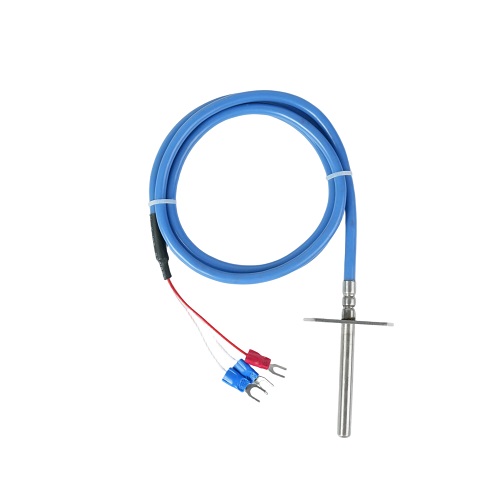
What Is an RTD Temperature Sensor?
An RTD (Resistance Temperature Detector) is a temperature sensor that measures temperature by detecting changes in electrical resistance.
The working principle is based on the characteristic that the electrical resistance of certain metals changes predictably with temperature. Platinum is commonly used as the sensing element because it provides excellent stability and accuracy.
The main advantages of rtd temperature sensors include:
High measurement accuracy
Excellent long-term stability
Wide temperature measurement range
Strong corrosion resistance
Long service life
Common RTD products include:
PT100 RTD sensors
PT1000 RTD sensors
Industrial RTD probes
Stainless steel RTD probes
Custom RTD temperature sensors
What Is a PT100 RTD Sensor?
A PT100 RTD sensor is a platinum resistance temperature detector with a resistance value of 100 ohms at 0°C.
The name PT100 comes from:
PT: Platinum sensing element
100: 100Ω resistance at 0°C
Features of PT100 Sensors
High temperature measurement accuracy
Stable resistance-temperature relationship
Compatible with industrial controllers
Reliable long-term operation
PT100 sensors are widely used in:
Industrial automation
Process control systems
Machinery temperature monitoring
Chemical equipment
Food processing equipment
What Is a PT1000 RTD Sensor?
A PT1000 RTD sensor is a platinum temperature sensor with a resistance value of 1000 ohms at 0°C.
Compared with PT100 sensors, PT1000 provides a higher resistance output, which helps reduce the influence of lead wire resistance during temperature measurement.
Features of PT1000 Sensors
Higher resistance output
Reduced wiring resistance influence
Better performance over longer cable distances
Stable temperature measurement
PT1000 sensors are commonly used in:
HVAC systems
Building automation
Energy management systems
Electronic temperature controllers
PT100 vs PT1000: Main Differences
| Feature | PT100 RTD Sensor | PT1000 RTD Sensor |
|---|---|---|
| Resistance at 0°C | 100Ω | 1000Ω |
| Signal Output | Lower resistance signal | Higher resistance signal |
| Lead Wire Influence | More affected by cable resistance | Less affected by cable resistance |
| Accuracy | High | High |
| Common Applications | Industrial systems | HVAC and precision applications |
| Measurement Current | Higher | Lower |
PT100 Wiring vs PT1000 Wiring
The wiring method directly affects the accuracy of an RTD temperature sensor. Common RTD wiring configurations include:
2-wire RTD wiring
3-wire RTD wiring
4-wire RTD wiring
2-Wire PT100 and PT1000 Wiring
A 2-wire RTD configuration is the simplest connection method. It is easy to install and cost-effective.
Advantages:
Simple structure
Low installation cost
Easy maintenance
However, cable resistance may affect measurement accuracy, especially in long-distance installations.
3-Wire PT100 and PT1000 Wiring
A 3-wire RTD configuration is the most common wiring method in industrial applications.
The additional wire helps compensate for lead resistance and improves measurement accuracy.
Advantages include:
Better accuracy than 2-wire systems
Reduced wiring errors
Good balance between cost and performance
4-Wire PT100 and PT1000 Wiring
A 4-wire RTD configuration provides the highest measurement accuracy by eliminating lead wire resistance effects.
It is commonly used in:
Laboratory equipment
Calibration systems
Precision temperature measurement
Advantages of PT100 RTD Sensors
Excellent Industrial Compatibility
PT100 sensors are widely accepted in industrial applications and are compatible with many temperature controllers and transmitters.
High Measurement Accuracy
PT100 provides reliable temperature measurement with excellent repeatability and stability.
Stable Long-Term Performance
The platinum sensing element maintains stable characteristics even after long-term operation.
Advantages of PT1000 RTD Sensors
Reduced Lead Resistance Error
The higher resistance value of PT1000 reduces the influence of cable resistance, making it suitable for longer cable installations.
Lower Power Consumption
PT1000 sensors usually require lower measurement current, helping reduce self-heating effects.
PT100 vs PT1000: Which One Should You Choose?
Choose PT100 When:
Industrial compatibility is important
Existing equipment uses PT100 input
Standard industrial applications are required
High accuracy is needed
Choose PT1000 When:
Long cable distance is required
Lower power consumption is preferred
Modern electronic controllers are used
HVAC applications are involved
Applications of PT100 and PT1000 RTD Sensors
Industrial Automation
RTD sensors are widely used for temperature monitoring in:
Production equipment
Motors
Industrial machinery
Control systems
HVAC Systems
PT1000 sensors are commonly used in:
Air conditioning systems
Heating systems
Smart building controls
Food Processing
RTD temperature sensors provide accurate temperature control during:
Cooking processes
Storage
Refrigeration
How to Choose the Right RTD Sensor?
1. Consider Measurement Accuracy
For general applications, both PT100 and PT1000 provide excellent accuracy. For precision measurement, 4-wire RTD configurations are recommended.
2. Consider Cable Length
Short distance applications: PT100 is suitable
Long distance applications: PT1000 may provide better performance
3. Check Equipment Compatibility
Before selecting an RTD sensor, confirm:
Sensor input type
Controller compatibility
Required wiring configuration
Both PT100 and PT1000 RTD sensors provide reliable and accurate temperature measurement solutions. PT100 sensors are widely used in industrial automation and process control, while PT1000 sensors are often preferred for HVAC systems, building automation, and applications requiring reduced wiring influence.
Understanding the differences between PT100 vs PT1000, RTD wiring methods, and application requirements helps engineers select the right RTD temperature sensor for improved accuracy, stability, and long-term performance.
FAQ About PT100 and PT1000 Sensors
What is the difference between PT100 and PT1000?
The main difference is resistance value. PT100 has 100Ω resistance at 0°C, while PT1000 has 1000Ω resistance at 0°C.
Is PT100 or PT1000 more accurate?
Both sensors can provide high accuracy. The better choice depends on the application, wiring method, and measurement requirements.
Can PT1000 replace PT100?
No. PT1000 cannot directly replace PT100 because they have different resistance values and require compatible measuring devices.
Which RTD sensor is better for long cable distances?
PT1000 generally performs better for long cable distances because its higher resistance reduces the influence of lead wire resistance.
