Aluminum foil is a thin, lightweight metal material widely used in industrial applications because of its excellent thermal conductivity, electrical conductivity, corrosion resistance, and flexibility. Depending on its thickness, alloy, surface finish, and processing method, aluminum foil can be customized for different manufacturing and engineering requirements.
What Makes Aluminum Foil Suitable for Industrial Applications?
Aluminum foil combines several useful properties in a thin and flexible material. It can provide thermal transfer, electrical conductivity, shielding, and surface protection while adding relatively little weight to a finished product.
Good thermal conductivity: Aluminum foil transfers heat efficiently, making it suitable for thermal management and heating applications.
Electrical conductivity: Aluminum foil can be used as a conductive material in electrical and electronic applications.
Corrosion resistance: Its natural oxide layer provides protection against many environmental conditions.
Lightweight construction: Aluminum offers a favorable strength-to-weight ratio for many industrial products.
Excellent flexibility: Thin foil can be bent, formed, laminated, or processed into different shapes.
Reflective surface: Aluminum foil can reflect radiant heat and light, which is useful for thermal management.
Common Industrial Applications of Aluminum Foil
1. Thermal Insulation
Aluminum foil is commonly incorporated into insulation systems where heat reflection and thermal management are required. Its reflective surface can help reduce radiant heat transfer when used as part of a properly designed insulation structure.
2. Aluminum Foil Heaters
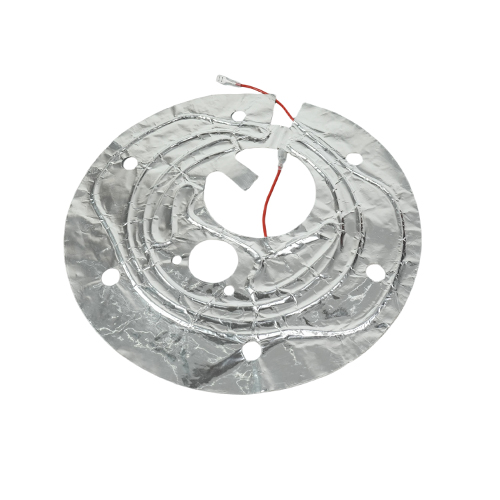
Aluminum foil is also used as a Heating Element carrier or heating structure in customized aluminum foil heaters. When combined with resistive heating components and insulation materials, it can provide an efficient and lightweight heating solution for equipment, instruments, automotive components, and other applications.
3. Electrical and Electronic Applications
Because aluminum is electrically conductive, aluminum foil can be used in certain electrical and electronic applications that require a thin conductive layer. The required foil thickness, alloy, surface condition, and connection method depend on the specific electrical design.
4. Battery Manufacturing
Aluminum foil is used as a current collector material in certain battery technologies. Its electrical conductivity, lightweight structure, and material characteristics make it suitable for applications where reliable current collection and weight control are important.
5. Cable and Wire Applications
Aluminum foil can be used in cable structures for shielding and electromagnetic interference management. In these applications, foil may be combined with other layers to provide the required shielding and mechanical performance.
6. HVAC and Heat Management
Aluminum foil is used in HVAC-related products and thermal management systems because it can provide heat reflection, lightweight protection, and resistance to environmental exposure. The foil may be laminated or combined with insulation materials depending on the system design.
7. Heat Exchangers
Aluminum foil and aluminum strip materials can be processed into components for heat exchange systems. Their thermal conductivity and lightweight characteristics make aluminum suitable for applications where efficient heat transfer and reduced component weight are required.
What Aluminum Foil Specifications Matter?
Industrial aluminum foil is not a one-size-fits-all material. Buyers and engineers normally need to consider several specifications before selecting a suitable product.
| Specification | Why It Matters |
|---|---|
| Thickness | Affects flexibility, strength, thermal behavior, and processing. |
| Aluminum Grade | Determines material properties and suitability for different applications. |
| Width and Length | Must match the required production and installation dimensions. |
| Surface Finish | Can affect appearance, bonding, conductivity, and processing. |
| Temper | Influences hardness, flexibility, and forming performance. |
Can Aluminum Foil Be Customized?
Yes. Industrial aluminum foil can be customized according to application requirements. Depending on the manufacturer and production process, customization may include foil thickness, width, length, alloy, surface treatment, cutting, laminating, adhesive backing, or other processing requirements.
For OEM and industrial projects, providing the application, required dimensions, operating temperature, electrical requirements, and installation method can help the manufacturer recommend a suitable aluminum foil specification.
How to Select Aluminum Foil for Industrial Use?
Start by identifying the main function of the foil. A thermal application may prioritize thermal conductivity and temperature resistance, while an electrical application may require specific conductivity and surface characteristics.
Define the application and working environment.
Determine the required aluminum foil thickness.
Select a suitable aluminum alloy and temper.
Confirm width, length, and dimensional tolerances.
Check surface finish and additional processing requirements.
Discuss customization and production requirements with the manufacturer.
Conclusion
Aluminum foil is widely used in industrial applications involving thermal management, electrical conductivity, insulation, battery manufacturing, cable shielding, HVAC systems, and heat transfer. Choosing the appropriate thickness, alloy, surface condition, and processing method is important for achieving the required performance.
FAQ
What is aluminum foil mainly used for in industry?
Industrial aluminum foil is commonly used for thermal management, electrical applications, insulation systems, battery components, cable shielding, HVAC products, and heat transfer applications.
Does aluminum foil conduct electricity?
Yes. Aluminum is an electrically conductive metal, so aluminum foil can be used in suitable electrical and electronic applications.
Can aluminum foil be used for high-temperature applications?
It can be used in many thermal applications, but the appropriate alloy, thickness, insulation structure, and operating temperature should be evaluated for each application.
Can industrial aluminum foil be customized?
Yes. Depending on the manufacturer, industrial aluminum foil can be customized in thickness, width, length, alloy, surface finish, and additional processing.
Looking for aluminum foil for an industrial application? Share your required dimensions, thickness, operating conditions, and application requirements to discuss a suitable aluminum foil solution.