



In industrial temperature measurement systems, RTD Temperature Sensors are widely used because of their excellent accuracy, stability, and repeatability. However, selecting the right RTD sensor is not only about choosing the sensing element, temperature range, or probe design. The wiring configuration also plays a critical role in measurement accuracy.
The most common rtd temperature sensor wiring configurations include 2-wire, 3-wire, and 4-wire RTD sensors. Each configuration has different advantages, limitations, and application scenarios.
Understanding the differences between 2-wire RTD, 3-wire RTD, and 4-wire RTD wiring helps engineers and purchasing teams select the right temperature measurement solution for their applications.
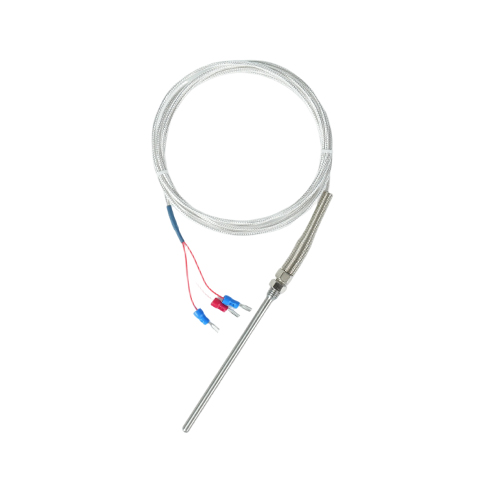
What Is RTD temperature sensor Wiring?
An RTD temperature sensor (resistance temperature detector) measures temperature by detecting changes in electrical resistance. The sensing element, commonly made from platinum, changes resistance as temperature changes.
The wiring configuration determines how the measurement system compensates for the resistance of the connecting wires.
Because the sensor cable itself has electrical resistance, especially in long-distance installations, it may introduce measurement errors. Different RTD wiring methods are designed to reduce this influence and improve measurement accuracy.
Common RTD wiring configurations include:
2-wire RTD sensor
3-wire RTD sensor
4-wire RTD sensor
2-Wire RTD Temperature Sensor: Simple and Cost-Effective Solution
A 2-wire RTD temperature sensor is the simplest wiring configuration. It uses two wires connected directly to the sensing element to transmit the resistance signal.
How Does a 2-Wire RTD Work?
In a 2-wire configuration:
One wire supplies current to the RTD element
One wire returns the measurement signal
The measuring device calculates resistance based on the electrical signal received.
However, the resistance of the connecting wires is included in the measurement, which can create errors.
Advantages of 2-Wire RTD Sensors
Simple Structure
The design is straightforward, making installation easier.
Lower Cost
With fewer wires and simpler construction, 2-wire RTD sensors are generally more economical.
Easy Maintenance
The wiring structure makes replacement and troubleshooting easier.
Limitations of 2-Wire RTD Sensors
The main disadvantage is reduced accuracy.
Wire resistance can affect measurement results, especially when:
Cable lengths are long
Temperature accuracy requirements are high
The sensor is used in precision applications
Common Applications
2-wire RTD sensors are suitable for:
General temperature monitoring
Short-distance measurements
HVAC systems
Basic industrial equipment
3-Wire RTD Temperature Sensor: The Most Common Industrial Choice
A 3-wire RTD temperature sensor is the most widely used configuration in industrial applications because it provides a good balance between accuracy and cost.
How Does a 3-Wire RTD Work?
A 3-wire RTD uses:
Two wires on one side of the sensing element
One wire on the opposite side
The additional wire allows the measurement system to compensate for lead wire resistance.
This significantly improves accuracy compared with a 2-wire configuration.
Advantages of 3-Wire RTD Sensors
Better Accuracy
The system can eliminate most errors caused by cable resistance.
Cost-Effective Performance
It provides improved measurement accuracy without the higher cost of a 4-wire configuration.
Widely Compatible
Many industrial temperature controllers and transmitters support 3-wire RTD sensors.
Limitations of 3-Wire RTD Sensors
Although more accurate than 2-wire designs, 3-wire RTDs still depend on:
Balanced wire resistance
Proper installation
Quality cable materials
For extremely precise measurement applications, a 4-wire configuration may be preferred.
Common Applications
3-wire RTD sensors are commonly used in:
Industrial automation
Process control systems
Food processing equipment
HVAC temperature monitoring
Machinery temperature control
4-Wire RTD Temperature Sensor: Maximum Measurement Accuracy
A 4-wire RTD temperature sensor provides the highest level of measurement accuracy among standard RTD configurations.
How Does a 4-Wire RTD Work?
The 4-wire design separates current supply and voltage measurement:
Two wires provide current to the RTD element
Two wires measure the voltage across the sensing element
Because the measuring circuit does not include lead wire resistance, the system can achieve extremely accurate temperature readings.
Advantages of 4-Wire RTD Sensors
Highest Accuracy
The configuration provides excellent resistance measurement precision.
Complete Lead Resistance Compensation
Cable resistance has almost no impact on measurement results.
Suitable for Laboratory and Precision Applications
It is ideal where accurate temperature measurement is critical.
Limitations of 4-Wire RTD Sensors
Higher Cost
More wires and more complex construction increase manufacturing costs.
More Complex Installation
The wiring system requires compatible measurement equipment.
Common Applications
4-wire RTD sensors are commonly used in:
Laboratory testing equipment
Calibration systems
Semiconductor manufacturing
Precision measurement systems
Scientific research equipment
2-Wire vs 3-Wire vs 4-Wire RTD Sensor Comparison
| Feature | 2-Wire RTD | 3-Wire RTD | 4-Wire RTD |
|---|---|---|---|
| Accuracy | Low | Medium to High | Highest |
| Wiring Complexity | Simple | Moderate | Complex |
| Cost | Lowest | Medium | Highest |
| Lead Resistance Compensation | No | Partial | Complete |
| Installation | Easy | Standard | More complex |
| Common Usage | Basic monitoring | Industrial applications | Precision measurement |
How to Choose the Right RTD Temperature Sensor Wiring Configuration?
Choosing the correct wiring configuration depends on several factors.
1. Consider Measurement Accuracy Requirements
If your application requires:
Basic temperature monitoring → 2-wire RTD may be sufficient
Industrial process control → 3-wire RTD is usually recommended
Laboratory-level precision → 4-wire RTD is the best choice
2. Consider Cable Length
Cable length has a direct impact on measurement errors.
For short-distance applications:
2-wire RTD can work effectively
For longer cable installations:
3-wire or 4-wire RTD is preferred
3. Consider Application Environment
Different industries have different requirements.
Food Processing
Requires:
Stable temperature control
Reliable measurement
Easy maintenance
3-wire RTD sensors are commonly used.
Industrial Automation
Requires:
Continuous monitoring
High reliability
Compatibility with control systems
3-wire RTD sensors are often the preferred solution.
Laboratory Testing
Requires:
Maximum accuracy
Precise temperature measurement
4-wire RTD sensors are usually selected.
How RTD Wiring Affects Temperature Measurement Accuracy
The wiring configuration directly influences measurement reliability.
Incorrect selection may lead to:
Temperature reading errors
Process control issues
Reduced system efficiency
Incorrect equipment operation
For industrial applications, selecting the appropriate RTD temperature sensor wiring configuration helps maintain accurate and stable temperature monitoring.
Applications of Different RTD Temperature Sensor Configurations
Manufacturing Equipment
RTD sensors are used to monitor:
Machine temperature
Heating systems
Production processes
HVAC Systems
Applications include:
Air temperature monitoring
Heating control
Cooling systems
Food and Beverage Processing
RTD sensors help maintain:
Processing temperature
Storage conditions
Product quality
Medical and Laboratory Equipment
High-accuracy RTD sensors support:
Testing systems
Calibration equipment
Temperature-controlled environments
How to Select a Reliable RTD Temperature Sensor Manufacturer?
For businesses purchasing temperature sensors, choosing the right manufacturer is essential.
A professional RTD temperature sensor manufacturer should provide:
Product Customization
Including:
Sensor dimensions
Cable length
Connector options
Temperature range
Probe design
Quality Control
Reliable suppliers should perform:
Resistance testing
Temperature calibration
Material inspection
Performance verification
Technical Support
Experienced manufacturers can provide solutions based on:
Industrial requirements
Installation conditions
Accuracy expectations
FAQ
Q1: Which RTD wiring configuration is most commonly used?
The 3-wire RTD configuration is the most commonly used because it provides a good balance between accuracy, cost, and installation convenience.
Q2: Is a 4-wire RTD more accurate than a 3-wire RTD?
Yes. A 4-wire RTD provides higher accuracy because it completely compensates for lead wire resistance.
Q3: Can a 2-wire RTD be used for industrial applications?
Yes, but it is generally suitable for applications where high measurement accuracy is not required.
Q4: Which RTD wiring is best for long cable distances?
3-wire and 4-wire RTD sensors are better choices for long-distance installations because they reduce errors caused by cable resistance.
Q5: Can RTD temperature sensors be customized?
Yes. Professional RTD sensor manufacturers can customize probe dimensions, cable length, connectors, materials, and wiring configurations.
Conclusion
Choosing the correct RTD temperature sensor wiring configuration is essential for achieving accurate and reliable temperature measurement. While 2-wire RTD sensors offer simplicity and affordability, 3-wire RTD sensors provide a practical solution for most industrial applications, and 4-wire RTD sensors deliver the highest accuracy for precision measurement systems.
Understanding the differences between 2-wire, 3-wire, and 4-wire RTD temperature sensors helps engineers and businesses select the right solution for their specific applications.
For industrial users requiring stable performance, accurate measurement, and customized solutions, working with an experienced RTD temperature sensor manufacturer ensures reliable temperature monitoring systems.
